The Art of Terrace Decor: How to Turn an Outdoor Space Into a Place Worth Staying
A terrace is not a balcony with ambition. It is a room without a ceiling and it deserves to be treated like one.
There is a hierarchy of outdoor spaces, and the terrace sits comfortably at the top of it. Not because it is the most glamorous (rooftop pools and private gardens would argue otherwise) but because of what it represents: enough space to actually do something with. Enough room to have people over, to eat outside without your elbow in someone’s risotto, to create multiple zones that serve different moods and different times of day.
And yet, terraces are routinely underdone. Left bare except for whatever furniture came with the apartment. Decorated once, badly, and then abandoned. Treated as an overflow zone for the indoors rather than a destination in their own right.
This is a waste of what is, objectively, some of the best real estate in your home. If you have a terrace, you have an opportunity. What follows is everything you need to make the most of it.
Start With the Floor, Because Everything Else Sits on It
Terrace decor almost always begins with furniture or plants, which means it almost always gets the sequence wrong. The floor is the foundation of the visual experience. It sets the tone for everything placed on top of it, and raw concrete, however structurally sound, is not a tone worth setting.
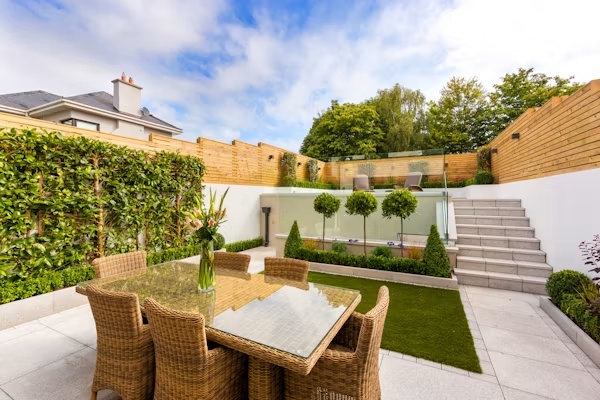
The good news is that terrace flooring is one of the most impactful and accessible upgrades you can make. Porcelain outdoor tiles in a large format give a clean, contemporary look that reads as intentional from the first glance.
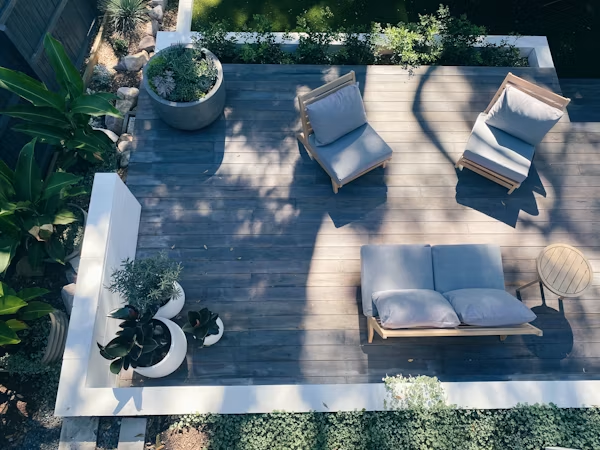
Natural stone like travertine, limestone, slate brings warmth and texture that improves with age and weathering. Composite wood decking, either in full boards or interlocking tiles for a more flexible installation, adds organic warmth to urban settings and pairs beautifully with greenery.
Whatever material you choose, the principle is the same: a floor that has been considered makes the entire terrace feel considered. It signals that someone made deliberate choices here, and the eye relaxes in response.
If the floor is already tiled in something inoffensive, an outdoor rug laid over a defined seating zone does a version of the same work. It draws a boundary, adds softness, and anchors the furniture into something that reads as a room rather than a collection of objects.
The most common terrace decorating mistake is furnishing it as a single undifferentiated space. A table goes out. Some chairs go around it. A couple of potted plants end up in the corners. The result is functional in a narrow sense, you can technically eat out there, but it never becomes a place you want to inhabit for its own sake.
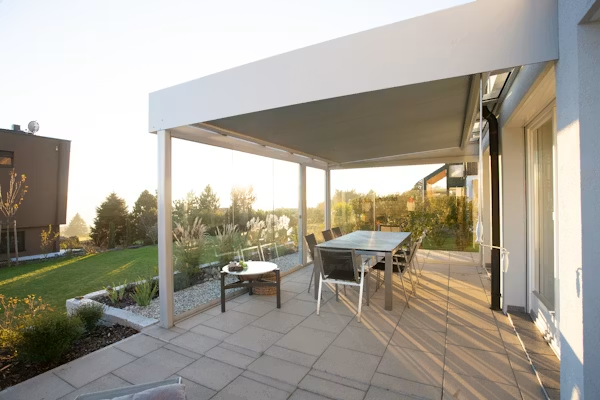
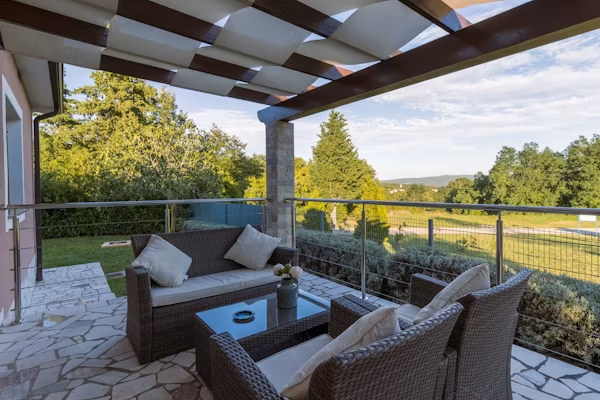
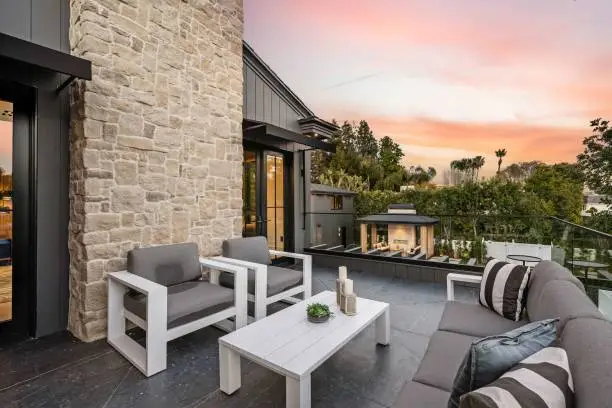
The better approach is to think in zones. A terrace, even a modest one, can support two or three distinct areas with different purposes and different atmospheres. A dining zone anchored by a table and chairs.
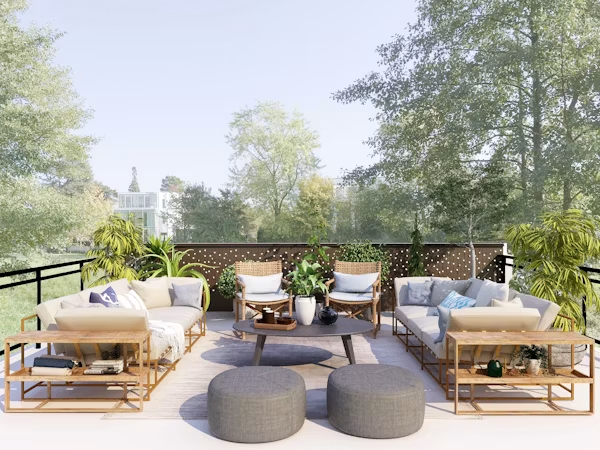
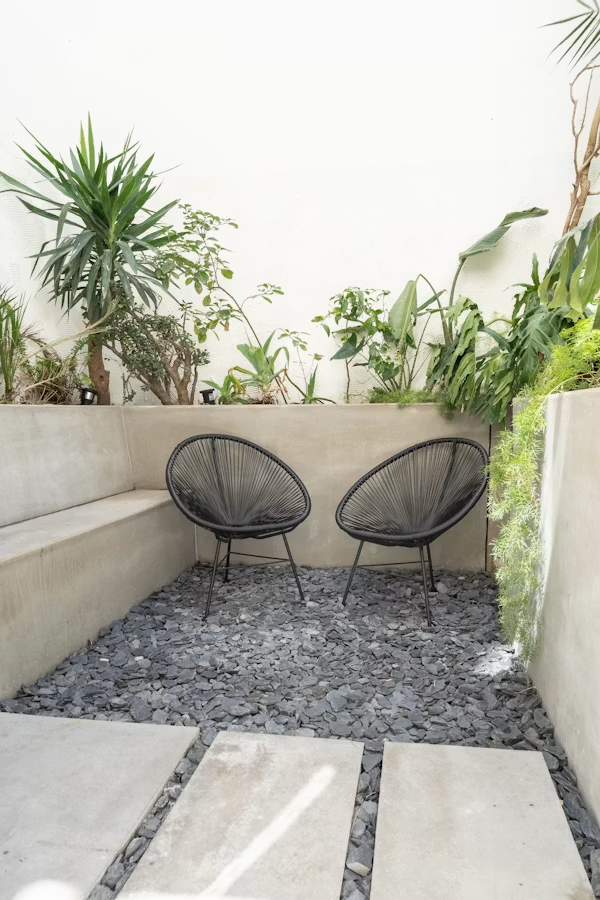
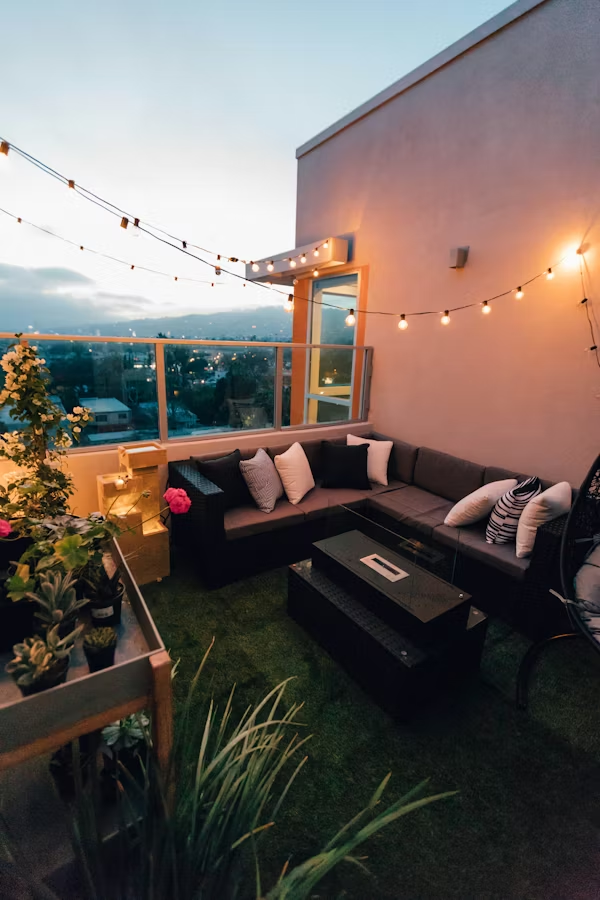
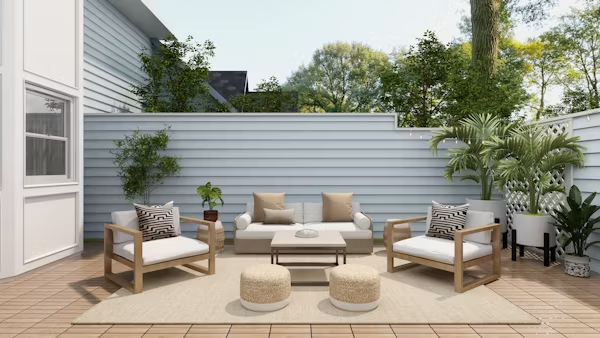
A lounge zone with a sofa or deep armchairs, a low coffee table, and cushions that invite you to stay longer than the meal. A quieter corner like a single chair, a side table, a floor lantern designed for one person, a book, and no agenda.
These zones don’t need to be separated by physical dividers, though a change in flooring material, an outdoor rug, or a strategically placed planter can create soft boundaries that feel intuitive rather than imposed. What matters is that each zone has a clear identity. When a space is organized into distinct purposes, it becomes easier to inhabit because it’s easier to understand.
Outdoor furniture has gotten genuinely good in the last decade, and the old compromise like enduring ugly, utilitarian pieces because they could withstand the weather no longer holds. There is beautiful furniture designed explicitly for outdoor use, in materials that handle rain and UV and temperature swings without losing their dignity.
The material conversation is worth having. Teak is the gold standard for outdoor wood: dense, naturally oily, resistant to moisture and insects, and gracefully weathers to a silver-grey if left untreated. Powder-coated aluminium is lightweight, rust-proof, and available in virtually every aesthetic from minimal to ornate.
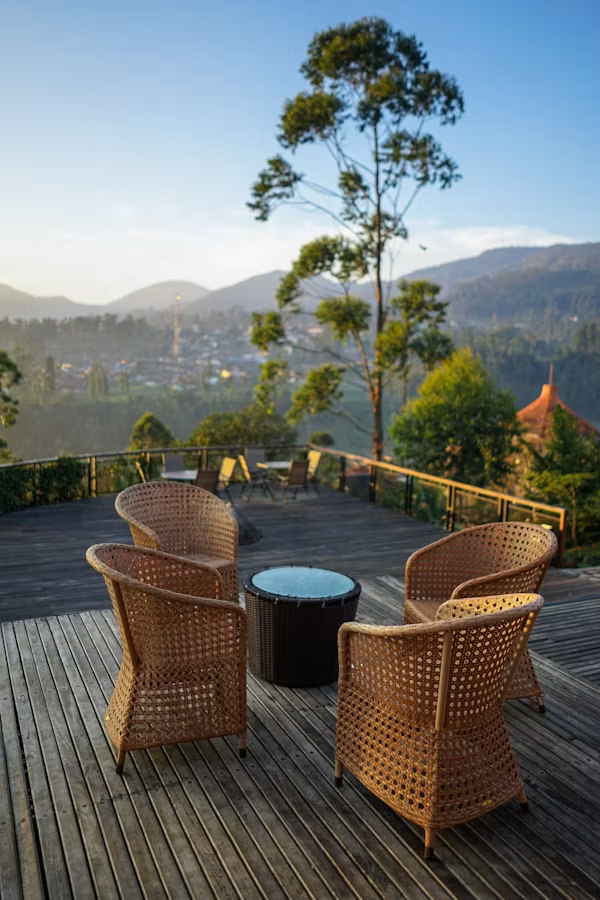
Synthetic rattan has improved dramatically in quality and is now a credible alternative to the natural version for most climates. Concrete and stone pieces such as tables, benches and stools bring a solidity and permanence to a terrace that lighter furniture cannot replicate.
Beyond material, the guiding principle for terrace furniture selection is proportion. The scale of the pieces should match the scale of the space. A terrace that can comfortably hold a large dining table shouldn’t be furnished with a bistro set. A medium terrace with a hulking eight-seater set will feel overwhelmed and hard to move through. Get the proportions right and the furnishing almost chooses itself.
Comfort matters more outside than in. People will linger on a terrace in proportion to how comfortable it is to do so. Invest in cushions. Not the thin, perfunctory kind that technically provide a layer between you and the metal seat, but proper, deep cushions in outdoor-grade fabric that you would genuinely want to sit on for two hours. The cushion is doing the hospitality work. Let it do it properly.
Greenery as Architecture
On a terrace, plants are not decoration. They are structural elements. They define edges, create privacy, introduce height variation, add movement, and bring a living quality to the space that no inanimate object can replicate.
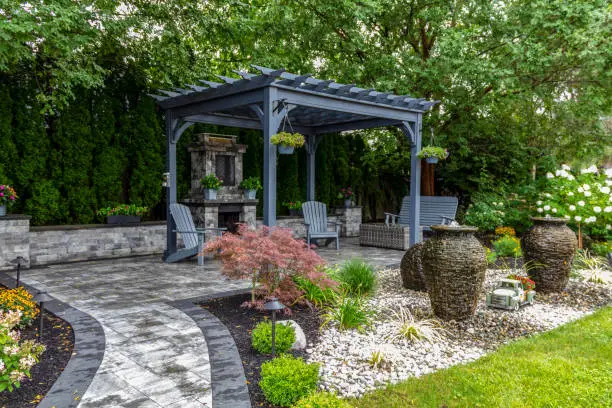
The best terrace planting schemes think about plants the way a good interior thinks about furniture: as pieces with different scales and functions that work together rather than independently. A tall, columnar plant such as cypress, bamboo an olive tree provides vertical structure and often privacy screening. Mid-height flowering plants and shrubs add color and seasonal interest at eye level. Low ground-cover plants or trailing varieties soften the edges of planters and steps.
The container matters as much as the plant inside it. A beautiful plant in a cheap plastic pot is a half-finished thought. Concrete planters have a clean, contemporary weight that suits most modern terraces. Terracotta brings warmth and ages beautifully.
Large ceramic glazed pots make individual plants feel like sculptures. Whatever you choose, scale the container to the plant: a small pot under a large plant looks precarious and aesthetically wrong; a large pot with a small plant looks like a spatial miscalculation.
If privacy is a concern and on most urban terraces, it is, tall planters along the perimeter filled with bamboo, ornamental grasses, or climbing plants on a trellis system can create a green screen that is both more attractive and more pleasant than any fence or panel. It moves in the wind. It grows. It changes with the seasons. No privacy screen made of wood or metal does any of those things.
Lighting Is the Difference Between a Space and an Experience
A terrace decorated for daylight and then left to a single harsh overhead fixture after dark is a terrace that stops working at sunset. Lighting is what extends the usability of an outdoor space across the full day, and it is almost universally underinvested in terrace design.
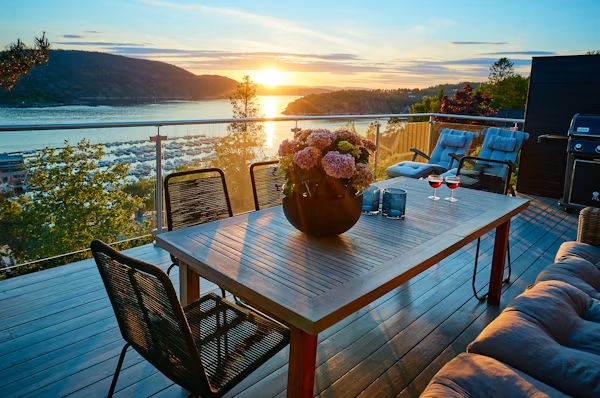
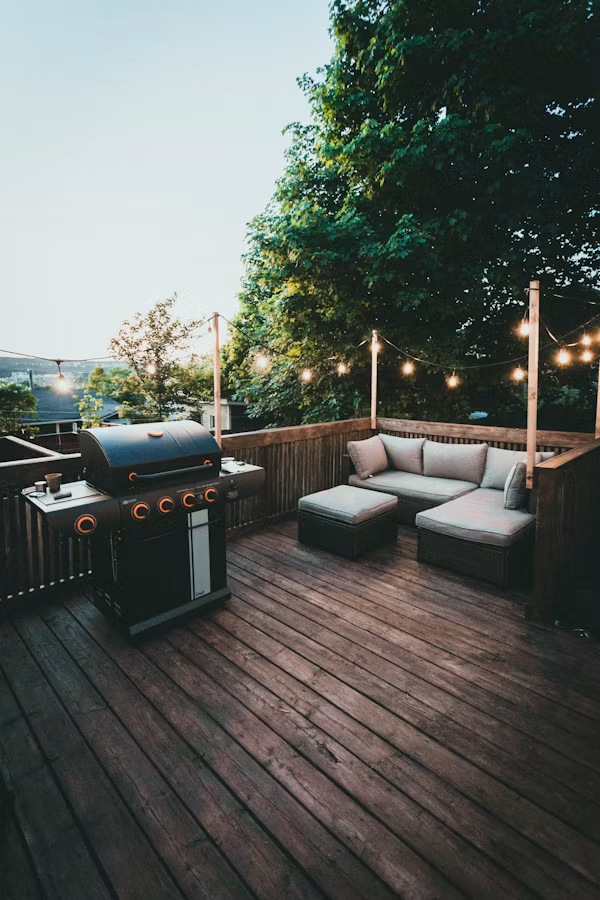
The same layering principle that applies to interior lighting applies here. Ambient lighting sets the overall brightness and mood; string lights overhead or along the perimeter, wall-mounted sconces, a large pendant lantern above the dining table.
Accent lighting draws attention to specific features such as an uplighter behind a large plant, small spotlights aimed at architectural details, solar stake lights in planters at ground level. Task lighting serves specific functions such as a concentrated light source above a dining table for evening meals, a small reading light near the lounge chair.
The key variable across all of these is colour temperature. Warm white (2200K–2700K) is the correct choice for almost every residential outdoor space. It is flattering, atmospheric, and reads as intentional. Cool white (4000K+) belongs in operating theatres and parking structures. Not your terrace.
Candles and fire also deserve a mention. A collection of outdoor candles or a bioethanol fire bowl on a terrace adds a sensory dimension; warmth, flicker, the slight smell of something burning that electric lighting simply cannot produce. On a cool evening, fire is not a decorative choice. It is the reason people stay outside.
The Details That Distinguish a Good Terrace From a Great One
Once the fundamentals are in place; the floor, the zones, the furniture, the plants, the lighting, it is the details that separate a terrace that looks good in photos from one that feels genuinely alive to be in.
Textiles are underused outdoors. Outdoor cushions are standard now, but outdoor throws, draped over a lounge chair for cool evenings, signal a level of comfort and hospitality that elevates the entire space.
A tablecloth on the dining table, even a simple linen one, makes outdoor meals feel more considered. A small outdoor rug under the coffee table, in addition to or instead of under the dining zone, adds another layer of warmth.
Scent is almost never discussed in terrace design, which is strange because it is one of the most powerful atmospheric tools available. Fragrant plants like lavender, jasmine, night-blooming jasmine for evenings, rosemary, sweet peas turn a terrace from a visual experience into a full sensory one. The smell of lavender on a warm afternoon is not something any design element can replicate. Put it near where people sit.
Finally: edit. A terrace accumulates things the way all outdoor spaces do like an extra pot here, a side table from a sale there, a decorative object that seemed like a good idea in February. Periodically, step back and look at the space with fresh eyes. Remove anything that isn’t earning its place. The terraces that look effortlessly beautiful are, almost without exception, ruthlessly edited. The abundance is curated. The ease is deliberate.
A terrace is one of those rare spaces in a home that can be genuinely transformative, not just for how it looks, but for how it changes daily life. Morning coffee that moves outside. Dinners that linger because no one wants to go in. Evenings spent doing nothing in particular, in the warm light of a well-placed lantern, in a chair that’s finally comfortable enough to justify staying.
That version of your terrace is achievable. It requires thought, some investment, and the discipline to design with intention rather than default. But the raw material like the outdoor space, the sky above it, the air is already there.