
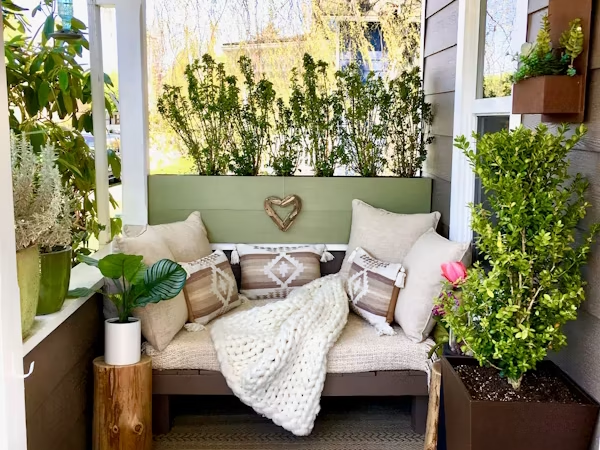
A small porch is not a problem to solve. It’s an argument for quality over quantity and it’s one worth making.
The front porch has a long and storied history in residential architecture. It was, for a significant stretch of American domestic life, the room where everything important happened, where neighbors were greeted, where children were watched, where summer evenings were conducted at a civilized pace with a glass of something cold. Then came air conditioning, and the porch retreated into symbolic relevance.
But the instinct behind it never really went away. The desire to be outside but sheltered. To be connected to the neighborhood without being fully in it. To have a threshold like a buffer zone between the world and your home that is worth occupying on its own terms.
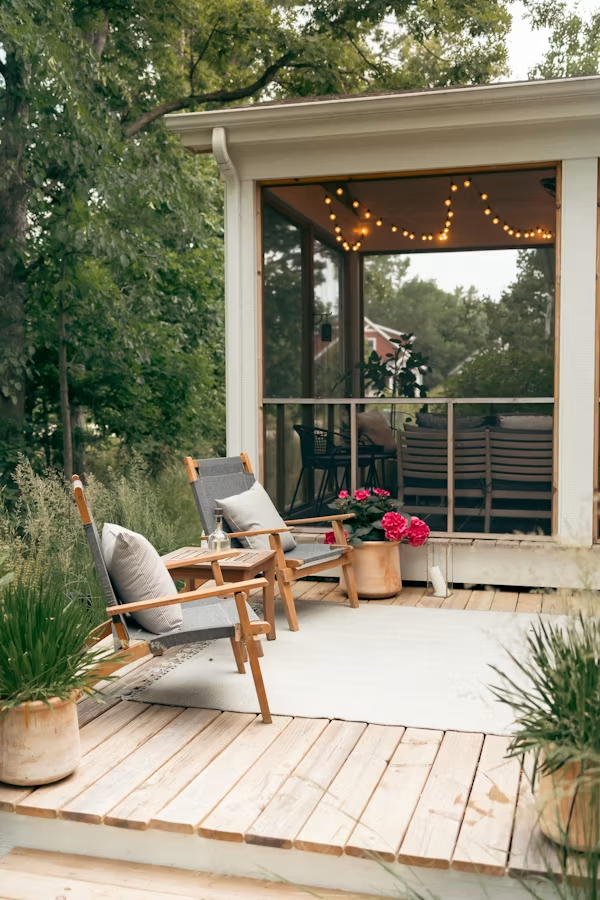
If you have a small porch, you have that. Even if it is four feet deep and barely wider than your front door. Even if the previous owners painted it a shade of beige that suggests they had entirely given up. Even if the only thing currently on it is a doormat that says “Welcome” in a font that doesn’t mean it.
The small porch is one of the most underestimated spaces in residential design and one of the most rewarding to get right.
The First Principle: Compression Is Not Failure
Before anything else, it is worth establishing that a small porch and an unsuccessful porch are not the same thing. The conflation of size with quality is the main reason small porches stay underdeveloped. People look at the limited square footage and conclude, before they’ve tried anything, that there isn’t enough room to do something meaningful.
There is. The trick, if it can even be called that, is to design for what the space actually is rather than what you wish it were. A small porch cannot be a wraparound veranda. It cannot fit a porch swing, a rocking set, a side table, and a potted tree.
But it can be one specific, beautifully executed thing. A welcoming entry moment. A two-person perch for morning coffee. A plant-framed threshold that makes arriving home feel like something.
Compression, in design, tends to produce focus. And focus, done well, produces spaces that feel intentional in a way that larger, more loosely conceived spaces often don’t. Some of the most memorable small porches exist precisely because their limitations forced a decision: this space does this one thing, and it does it completely.
The Floor Is Telling People Something
The porch floor is the first horizontal surface a visitor sees and if the porch is small arguably the most dominant visual element in the space. It sets the tone before anyone looks at the furniture or the plants or the front door. And on most small porches, that tone is set by bare, weathered wood or cracked concrete, neither of which is saying anything worth hearing.
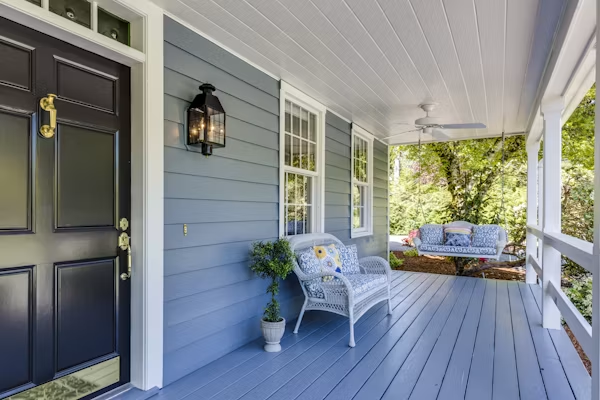
Addressing the floor doesn’t require a contractor or a major budget. A coat of porch paint in a deep, deliberate colour like charcoal, forest green, a warm terracotta or classic black transforms a tired surface into something that reads as chosen. If the boards are in good condition, a semi-transparent stain that enhances the wood grain rather than obscuring it is a more elegant option.
For concrete or aggregate surfaces, porch-specific floor paint works well, or interlocking composite tiles that snap into place and can be removed at the end of a lease without so much as a conversation with the landlord. An outdoor rug over any of the above adds layering, warmth, and the most reliable signal in residential design that someone lives here who cares.
The rule for rug sizing on a small porch: bigger than you think, and placed deliberately. If the porch has a defined seating area, the rug should sit under the furniture, not beside it. If the porch is primarily a transitional space, entry rather than seating, a runner along the length of the floor is both practical and intentional.
Seating on a Small Porch Is a Commitment Worth Making
There is a philosophical position, not uncommon among apartment and small-home dwellers, that a porch too small for “real” seating is a porch not worth furnishing with seating at all. This position is incorrect.
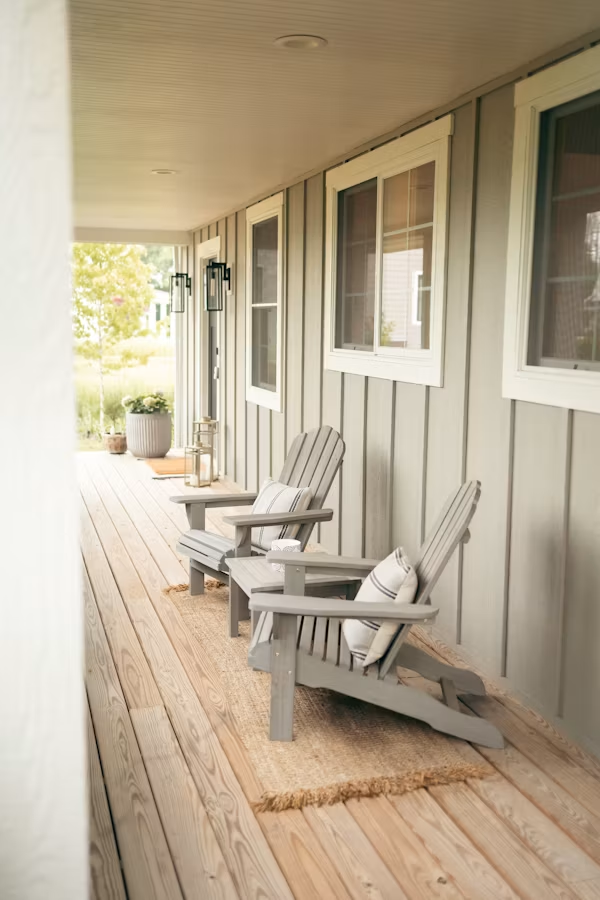
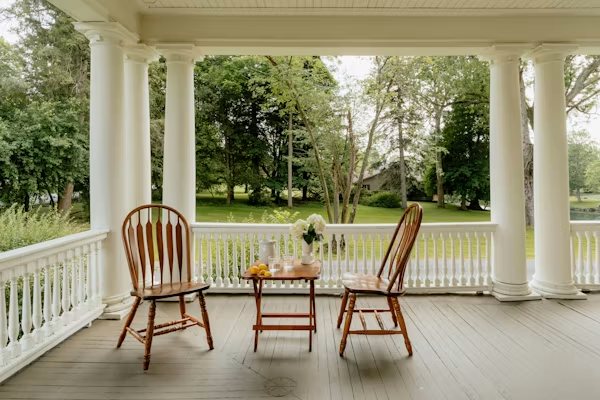
A single rocking chair. A small slatted bench against the wall. A pair of folding chairs that can be brought out and put away as the mood requires. Any of these changes the nature of the porch from a transitional space to a destination. It says: this is somewhere you can stop. This is a place where sitting happens.
Related Posts:

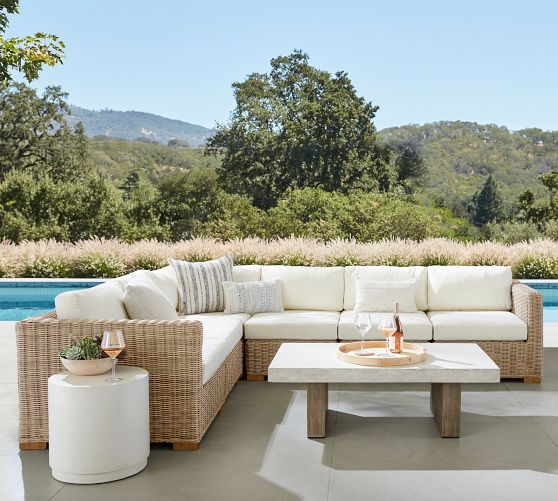
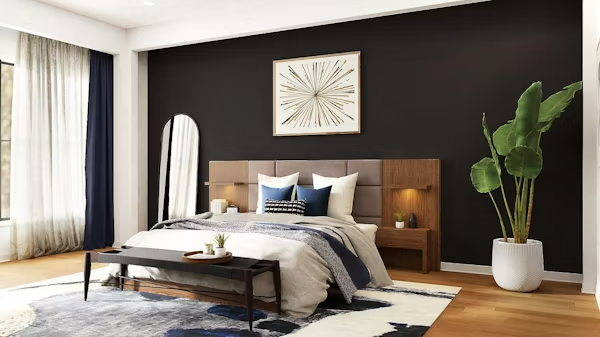
The furniture choices for a small porch are necessarily constrained by scale, which is actually helpful. You don’t need to compare twelve sectional options. You need one piece, appropriately sized, that suits the aesthetic of the house and is comfortable enough to actually use.
A classic wooden rocking chair in white or natural wood is correct for a traditional porch in a way that transcends trend cycles. A pair of low, slung canvas chairs suits a more casual or contemporary home. A bench with storage inside is doing double duty and earning its footprint.
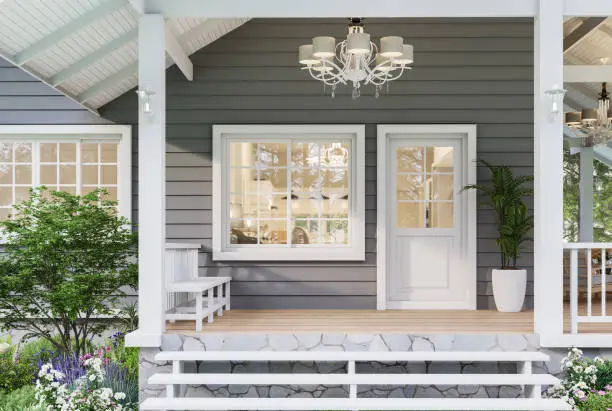
Whatever you choose, the critical variable is comfort. Outdoor furniture that is beautiful but unpleasant to sit in is furniture that goes unused, which means it graduates from decoration to clutter. A thick, weather-resistant cushion is not optional. It is doing the actual work of making the porch liveable.
The Front Door Is Part of the Decoration
On a small porch, where every element is in close visual proximity to every other element, the front door participates in the decor whether you intend it to or not. An unremarkable door in builder-grade beige undermines whatever you’ve done with the furniture and plants around it.
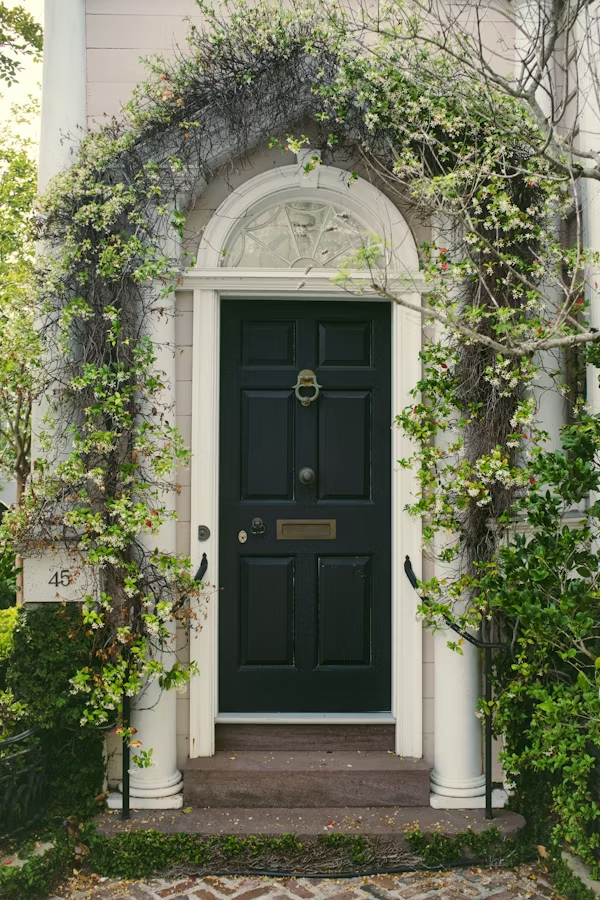
A door painted in a confident, deliberate colour becomes the focal point of the entire entry and by extension, the whole facade.
This is one of the highest-impact, lowest-effort improvements available to any homeowner or renter working with permission to paint. A rich navy, a warm black, a deep olive green, a classic red, the options are well-established precisely because they have been proven to work across many different house styles and many different surrounding contexts. The colour doesn’t need to be bold, necessarily. It needs to be chosen.
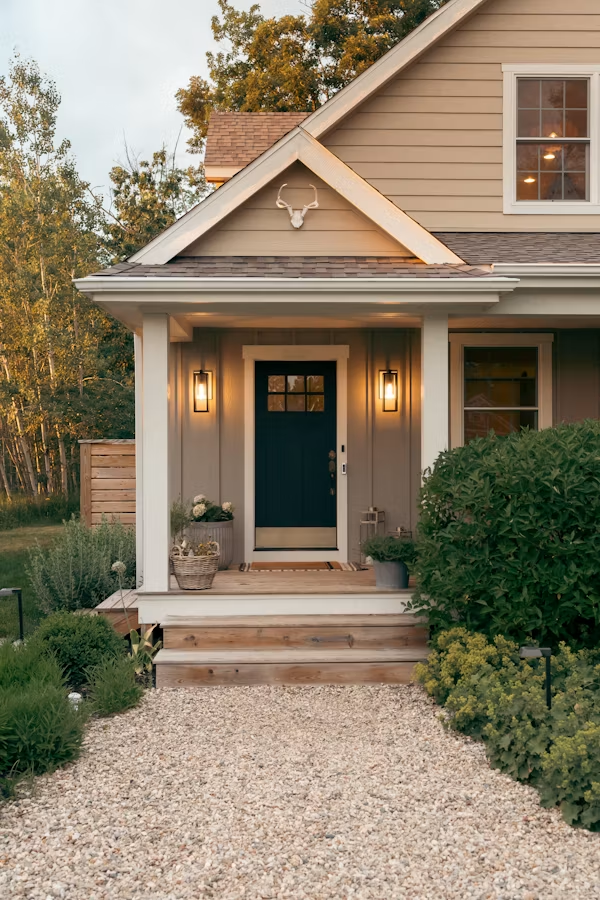
Hardware follows the same logic. Replacing a worn or generic door handle, house numbers, and light fixture with cohesive, considered alternatives costs less than most people assume and produces a visual upgrade disproportionate to the investment. Brushed brass, matte black, and unlacquered brass are all having sustained moments. Choose one finish and repeat it across all hardware on the porch for a consistency that reads as designed.
Plants Do the Heavy Lifting That Furniture Can’t
On a small porch, plants are the element that creates atmosphere more efficiently than anything else. They add height, texture, colour, and life in a way that inanimate objects simply cannot, and they do it in a relatively small footprint when placed thoughtfully.
The classic flanking arrangement, a matching pair of planters on either side of the front door works because it works. It frames the entry, creates symmetry, and signals welcome. The plants inside those planters should be selected for the specific light conditions of the porch (many front porches are shadier than they appear), the climate, and the desired aesthetic.
Topiaries read as formal. Ornamental grasses read as relaxed and contemporary. Evergreen shrubs read as permanent and considered. Flowering annuals read as seasonal and cheerful.
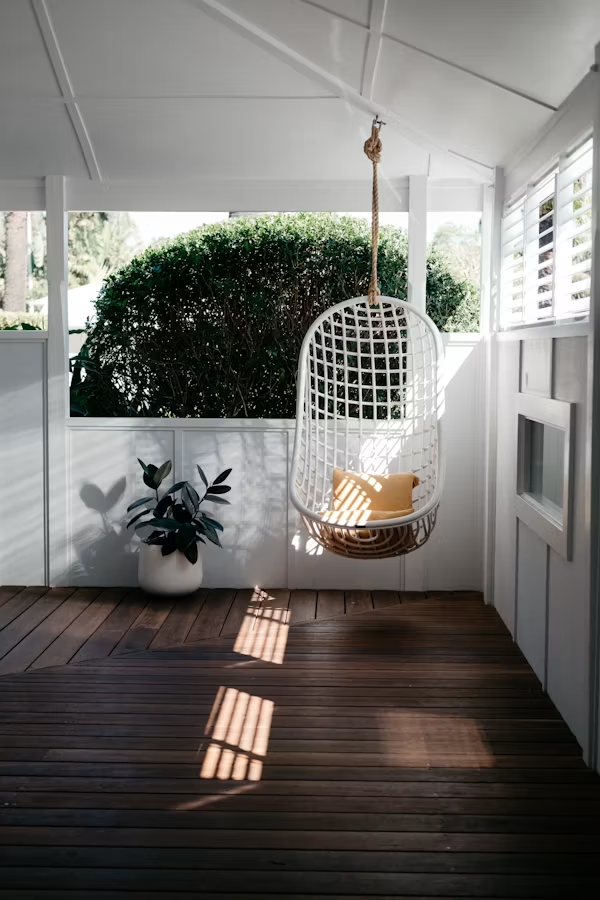
Beyond the door flanking, a small porch can support a window box under any front window, a hanging basket or two from the porch ceiling or overhead beam, and a grouping of smaller pots clustered at varying heights in an unused corner.
Varying the heights of potted plants by using plant stands, upturned pots as risers or deliberately mixing small and large containers is the detail that separates a collection of plants from a considered planting scheme. The eye needs somewhere to travel vertically. Give it a path.
Lighting Changes Everything After 5pm
A small porch that is pleasant during the day and gloomy at night is a porch that stops working for half the hours you’re home. Lighting on a small porch is typically neglected, a single functional overhead fixture that treats the entry as a security requirement rather than an atmospheric opportunity.
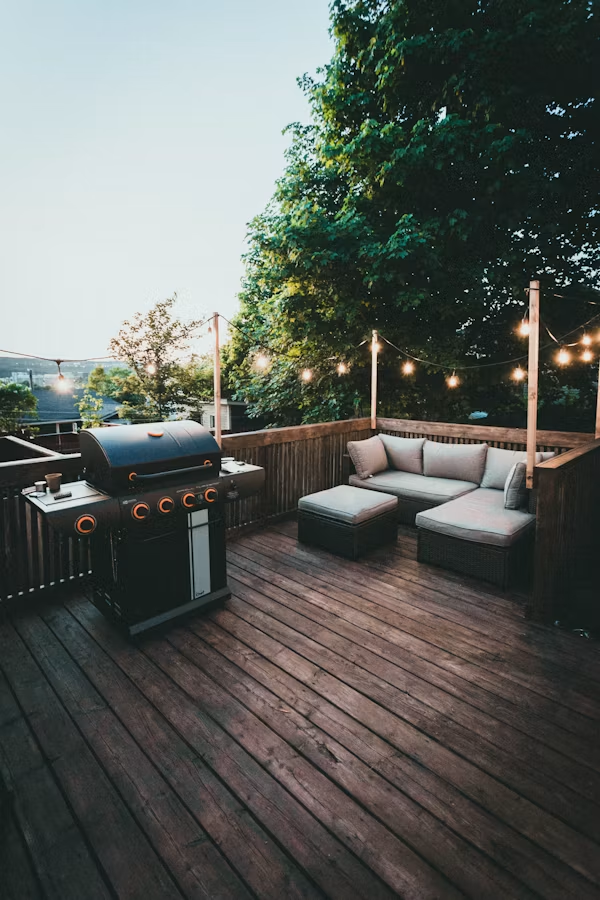
The overhead fixture matters and is often fixable without an electrician. A lantern-style pendant or a wall-mounted sconce in a coordinated finish to the door hardware upgrades the entry significantly. But the real atmosphere comes from supplementary light: a string of warm Edison bulbs along the porch ceiling or railing, a small solar lantern on an occasional table or hanging from a hook, candles in hurricane lanterns on the steps for evenings when people are coming over.
Warm colour temperature, the same 2200K to 2700K range that applies to all residential outdoor lighting is non-negotiable. It is flattering to people, flattering to the plants, and flattering to the architecture. Cool white light on a porch turns a welcoming threshold into something that resembles a security camera installation. Warm light tells people they are in the right place.
The Details That Make It Yours
Once the structure is in place like a good floor, considered seating, a confident front door, proper planting, layered light, the small porch becomes a canvas for the specific, personal choices that give a home its character.
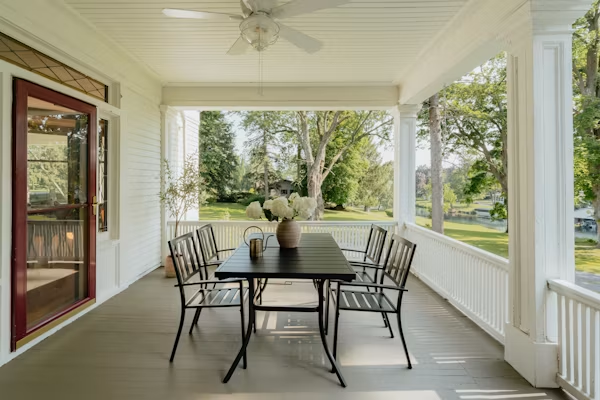
A doormat with actual personality instead of the aggressively neutral “Welcome” variety. House numbers in a typeface that matches the spirit of the house. A wreath on the door that changes with the season rather than staying up until it disintegrates.
A small lantern with a candle inside that gets lit on Friday evenings as a personal ritual. A hook by the door for bags, coats, dog leads, the objects that actually belong at the threshold between the outside world and the inside one.
These details are small. Their cumulative effect is not. A porch decorated with attention to the small things communicates something true about the people who live there. It suggests that the threshold has been considered, that arriving here is an experience worth having, that someone on the other side of that front door pays attention.
The Porch Is the First Sentence
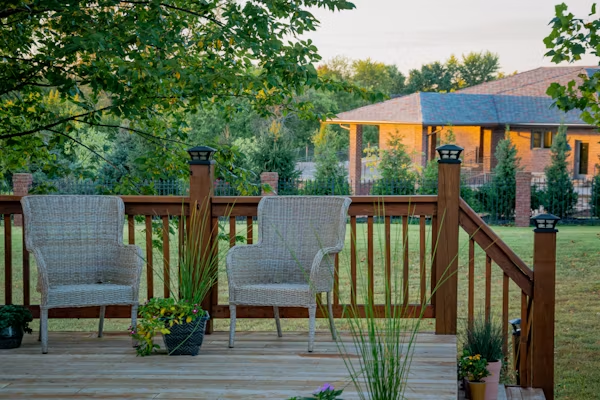
In writing, the opening line of a piece of work does more than begin the story. It establishes tone, builds expectation, and makes a promise to the reader about the experience ahead. The porch does the same thing for a home. It is the first sentence. It tells every visitor and every version of yourself returning at the end of a long day what kind of place this is.
A small porch, thoughtfully done, tells a better story than a large one decorated by default. It says that the people here made choices. That the space, however modest, was worth caring about. That arriving home is, in some small but real way, an event.
That is more than enough. That is, in fact, exactly the point.