
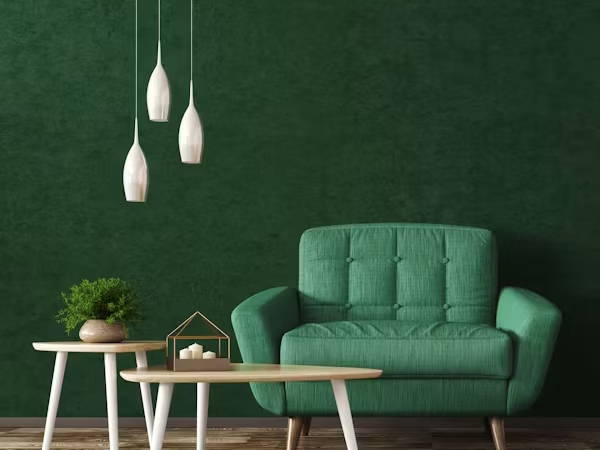
You bought the green couch. You did the right thing. Now let’s make the rest of the room worthy of it.
At some point in the last few years, the green sofa crossed a threshold from design risk to design statement. What was once the kind of choice that required either deep confidence or deliberate eccentricity is now, and this is meant as a compliment, an act of considered taste. Forest green, olive, sage, emerald, hunter, moss: the family of greens available in upholstery has expanded alongside the cultural willingness to put something other than grey or beige in the center of a living room.
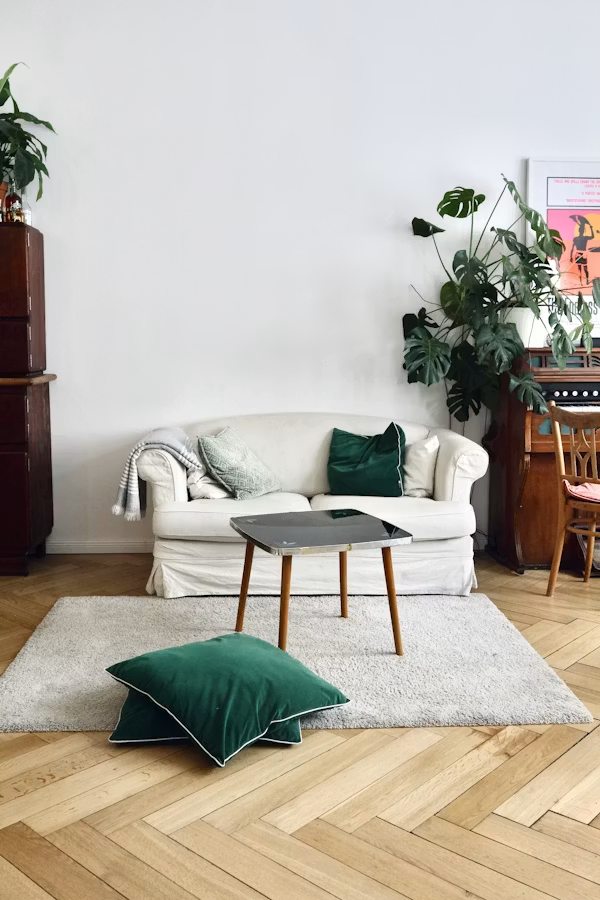
And yet. The green couch, for all its current cultural capital, remains a piece of furniture that many people buy with conviction and then stare at from the doorway, wondering how to build a room around it. It is commanding. It has opinions. It does not sit quietly in a space and wait to be noticed, it arrives and it expects the rest of the room to have a response ready.
This guide is that response. Whether your green sofa is already installed and the room around it is still undecided, or you’re building the whole scheme from scratch, here is how to design a living room that makes your green couch look like the piece it deserves to be.
First, Know Your Green
Not all greens are the same, and not all greens are asking for the same room around them. This sounds obvious and is consistently underestimated. Before deciding on anything else; the paint colour, the rug, the accent pieces, identify exactly what kind of green you’re working with, because the answer changes almost every subsequent decision.
A deep, saturated forest green or hunter green has a richness and intensity that belongs to the same family as dark navy and burgundy. It is a serious colour. It wants a room that matches its gravity; dark wood, aged brass, heavy textures, moody walls. It does not want to be surrounded by breezy whites and light linens, which would produce a colour mismatch that neither the sofa nor the backdrop could recover from.
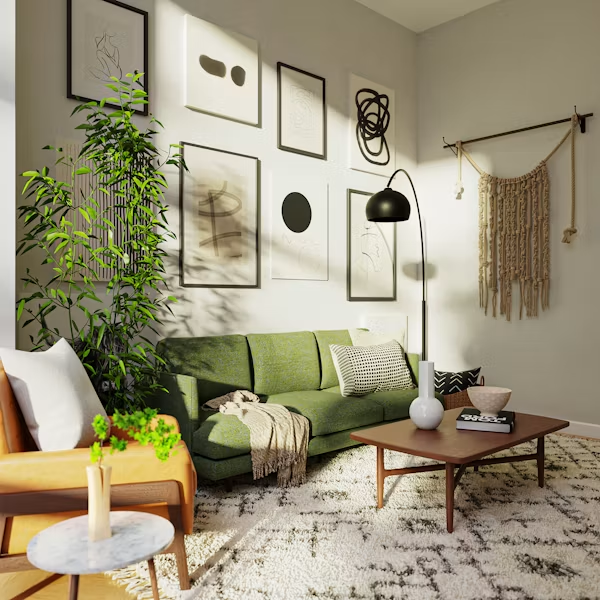
An olive green sits in murkier, more complex territory, it carries yellow and brown undertones that make it warmer and earthier than a true green. It wants natural materials: raw linen, jute, terracotta, unfinished wood. It belongs in a room that references the natural world with directness rather than refinement.
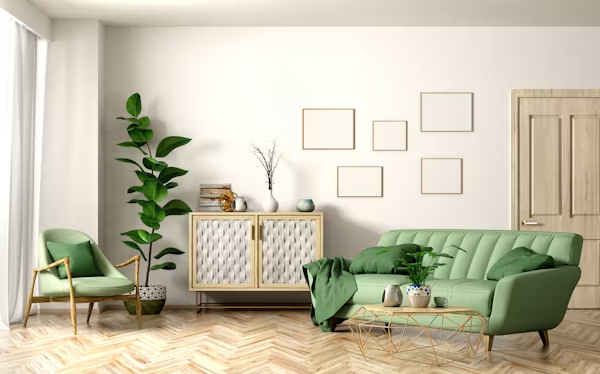
Sage is the lightest and most accommodating of the family. It reads almost as a neutral in certain lights, and in those lights it gives you the most freedom as it can coexist comfortably with warm whites, pale stone, dusty pinks, and even other soft colour accents without producing conflict.
Emerald is the showboat of the group. High chroma, high saturation, unapologetically dramatic. A room built around an emerald sofa should lean into the drama rather than attempting to soften it.
Know your green. The rest follows from that.
The Wall Colour Question, Which Everyone Gets Wrong in the Same Direction
The most common mistake made with a green sofa is painting the walls white. White walls seem safe, neutral, non-committal, unlikely to clash. But white walls next to a green sofa don’t produce a neutral backdrop. They produce a contrast that makes the sofa look like a furniture showroom piece that hasn’t been styled yet. The sofa pops, but it pops against nothing, which is not the same as popping against something intentional.
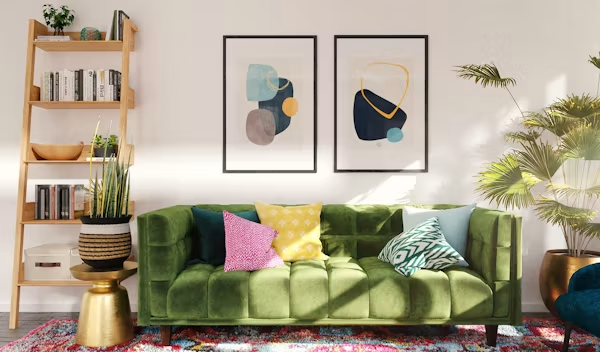
The rooms that make green sofas look genuinely extraordinary almost always make a bolder wall colour choice. And here, counterintuitively, the best options are often in the same green family as the sofa. A deep forest green sofa against a slightly lighter sage or olive wall creates a tonal layering that is sophisticated and enveloping as the room wraps around you rather than presenting itself flatly. It sounds like it might be too much green. In practice, it almost never is.
Beyond the tonal approach, warm, deep neutrals are the green sofa’s most reliable allies. A warm terracotta or earthy rust creates a natural contrast that references the landscape like green foliage against warm earth in a way that feels instinctively right rather than designed.
A deep, warm off-white or parchment with heavy yellow or pink undertones sits alongside green in a way that pure white never manages, providing brightness without the clinical contrast. A dusty blush or nude pink makes an unexpectedly strong partner, particularly for softer sage or olive tones.
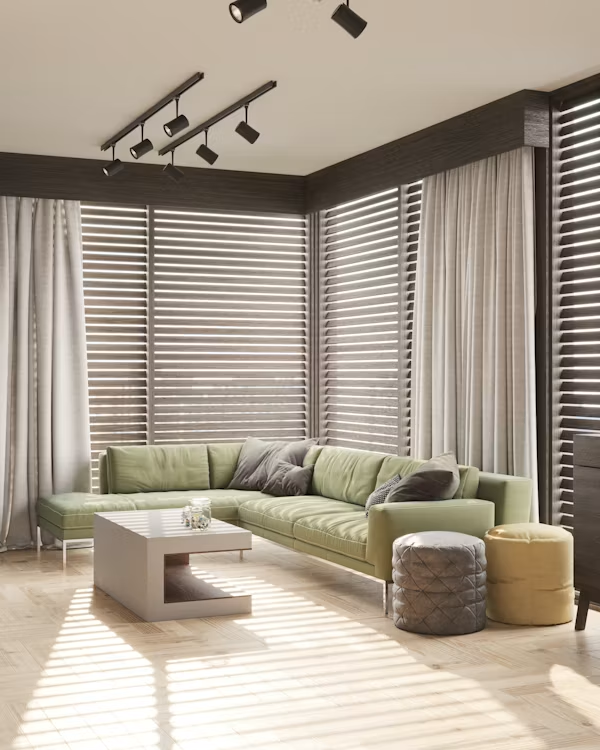
What to avoid, beyond the cold white: cool grey, which fights the warmth in most greens and produces a colour relationship that feels unresolved; and any blue with cool undertones, which creates the kind of chromatic tension that the eye registers as something being wrong without necessarily being able to identify what.
Related Posts:

The Rug That Makes the Room
In any living room, the rug is the element that either pulls everything together or confirms that nothing is quite working. With a green sofa, the rug has an additional responsibility: it grounds the sofa in the room. A green sofa floating on a bare floor or sitting on a rug that has no visual relationship to it looks unmoored. The right rug makes the sofa look like it was always meant to be there.
The most forgiving and consistently successful rug choices for green sofas are warm neutrals in natural fibres like a large jute or sisal rug, a vintage-look Persian or Turkish rug in earthy tones of rust, cream, and brown, or a wool flatweave with an abstract or geometric pattern in warm earth colours. All of these share the quality of containing colours that are adjacent to green on the warm spectrum as they don’t match it directly, but they belong to the same world, which is the relationship you’re after.
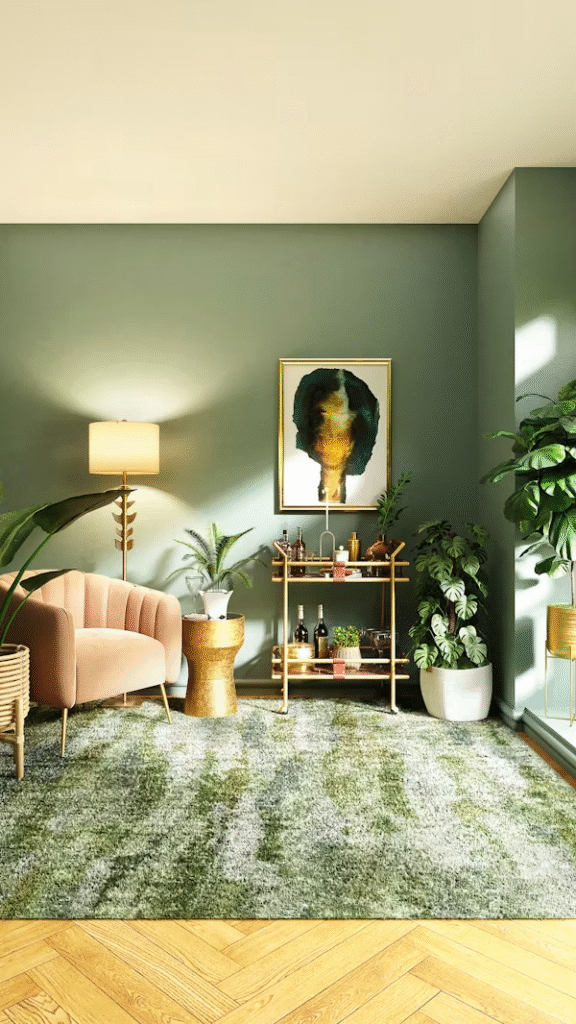
A rug with actual pattern is often better than a plain one beneath a green sofa, because the sofa itself is already a strong visual element and a patterned rug creates a visual conversation rather than a hierarchy. The key is that at least one colour in the rug’s pattern should echo the green of the sofa, even loosely. This creates the cohesion that distinguishes a designed room from a furnished one.
In terms of sizing: the rug should be large enough that the front legs of the sofa sit on it. This is the rule that applies universally to living room rugs and is violated more commonly than any other furniture proportion principle. A rug that the sofa perches in front of, rather than on, makes both the sofa and the rug look like they arrived separately and never made friends.
The Materials Conversation
Green sofas, particularly in velvet or bouclé, have a richness of surface that benefits from material contrast elsewhere in the room. A room where everything is smooth and flat will make the sofa feel like the only textural event in an otherwise uneventful space. Layering materials is what distributes the visual interest and makes the whole room feel alive.
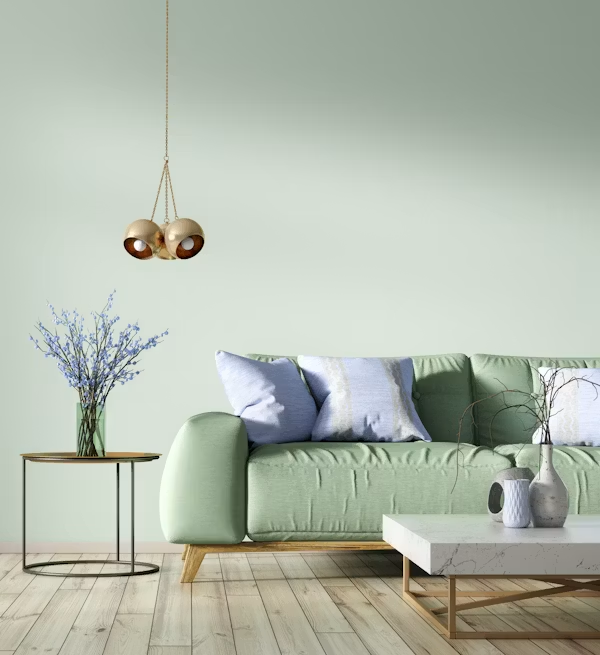
Wood is the green sofa’s most natural companion, warm-toned woods particularly. A walnut coffee table, oak shelving, a rattan side chair, a wooden floor in a honey or amber tone: all of these bring warmth into the room’s material palette that complements the depth of green upholstery. Light natural wood creates a Scandinavian calm around a sofa that might otherwise feel quite heavy. Dark, aged wood pushes things toward the more dramatic end of the spectrum.
Metal accents in brass or unlacquered gold are a reliable choice with green in the same way that gold jewellery works with almost any clothing colour since they add warmth and richness without competing for attention. Brass candleholders, a gold-framed mirror above the mantelpiece, a side table with brass legs: these details read as intentional and coherent alongside a green sofa in a way that chrome or stainless steel finishes do not.
Linen and cotton in cream or warm white for throw cushions and blankets soften the intensity of a saturated green without neutralising it. Cushions in terracotta, rust, mustard, or deep pink create the colour play that makes a green sofa feel styled rather than simply present.
Plants But Handled With Honesty
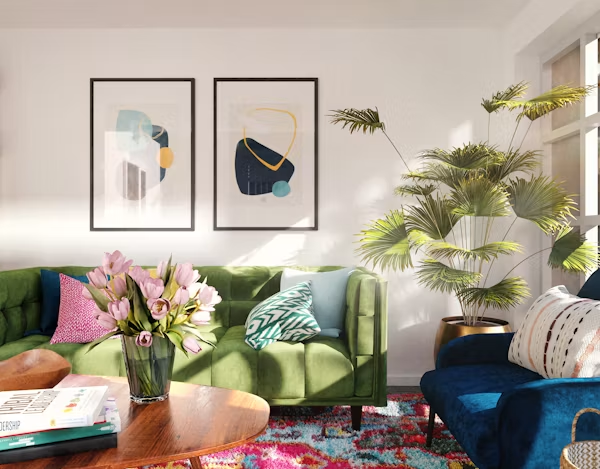
The green sofa and the houseplant face an obvious question: do they clash? They don’t. The greens of living plants and the greens of upholstery fabric are separated enough in texture, tone, and character that the eye doesn’t conflate them. A room with a green sofa and abundant plants doesn’t look like a greenhouse. It looks like a considered, nature-forward living room where every design choice is in conversation with the natural world.
That said, plant placement matters. A large plant like a fiddle-leaf fig, a monstera, a tall sansevieria placed behind or beside the green sofa rather than directly in front of it provides backdrop and vertical interest without competing visually with the sofa’s silhouette. Smaller plants distributed at varying heights around the room create a living context for the sofa that grounds it in an intentional botanical scheme rather than a random accumulation of greenery.
The pots matter as much as the plants. Terracotta, matte white, cement grey, and dark glazed ceramic all suit a living room built around a green sofa. Bright, glossy coloured pots introduce a note that typically doesn’t belong in the same register as the rest of the scheme.
The Light That Changes Everything at 6pm
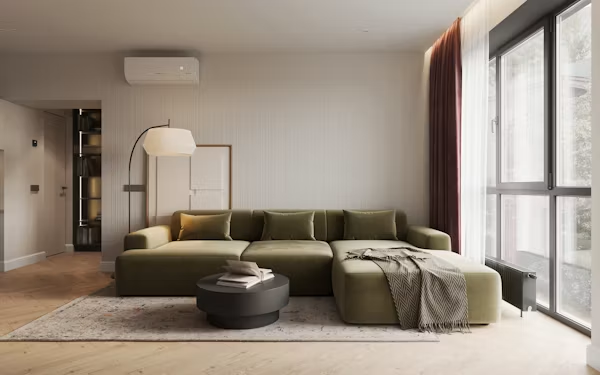
A green sofa looks different at noon than it does at dusk. This is true of all richly coloured pieces, and it is particularly true of green, which shifts dramatically across the spectrum of natural and artificial light. A forest green velvet sofa in afternoon sun has a luminosity and warmth that the same sofa under cold, overhead fluorescent light simply does not. Lighting the room well is not just atmospheric preference, it is the difference between your sofa looking like a design choice and looking like a mistake.
Warm-toned bulbs across all light sources in the room like table lamps, floor lamps, overhead pendants bring out the warmth in green upholstery and the earthiness of the natural materials around it. A mix of light heights and sources, as always, creates the layered quality that distinguishes a living room from a room with furniture in it. The green sofa, in the right light, looks genuinely extraordinary. Achieving that light is part of making it work.
The Permission Slip You Didn’t Ask For
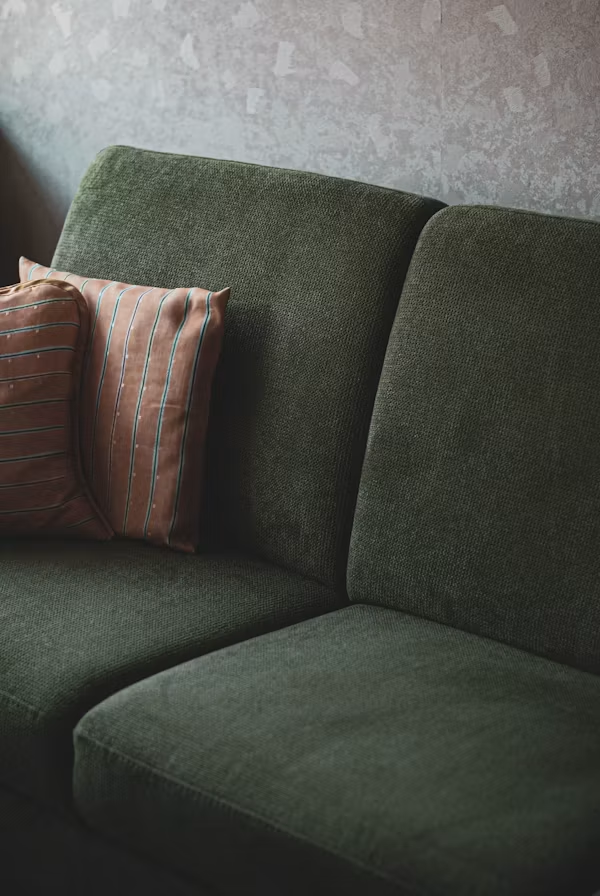
The green sofa announces something about the person who chose it: that they were willing to move beyond the default, to make a choice with colour instead of against it. The room around it should honour that decision rather than hedging against it.
This is not the time for cautious wall colours and safe beige accessories. The green sofa has made a commitment. The room should meet it with equal conviction like in the wall colour, in the rug, in the materials, in the plants, in the light. Design, like most things worth doing, rewards the willingness to take it seriously.
You bought the green couch. The only remaining question is how good you want everything around it to be.