
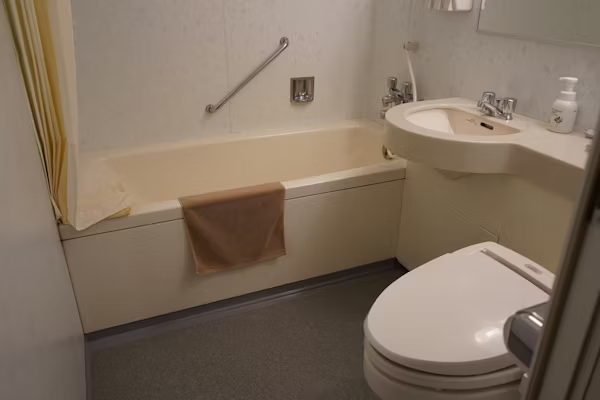
If your bathroom is so compact you can brush your teeth, shower, and question your life choices without moving your feet, welcome. A tiny bathroom is not a failure of architecture—it’s just a design puzzle with attitude. The right small bathroom layout can make a cramped room feel organized, stylish, and weirdly luxurious. Yes, even if your sink is currently fighting your door for dominance.
Most people assume they need more square footage. Usually, they just need better flow. A smarter small bathroom layout improves how you move, where things live, and how the room feels at first glance. And when your layout works, storage gets easier, cleaning gets faster, and mornings become less chaotic.
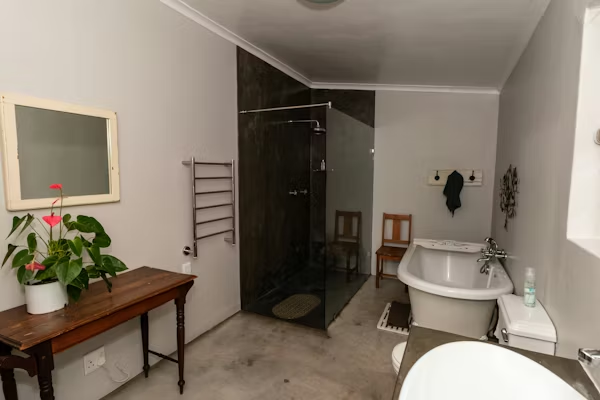
Below are 12 practical, witty, and highly doable ideas to improve your small bathroom layout without turning your life into a six-month renovation reality show.
1) The Classic Wet Wall Layout (Plumbing’s Best Friend)
One of the most efficient small bathroom layout strategies is keeping sink, toilet, and shower on the same plumbing wall. It reduces complicated pipe runs, saves renovation costs, and creates a cleaner line of sight. In a compact room, simplicity is your secret weapon.
This setup also makes the room feel less visually busy because fixtures are concentrated instead of scattered. If you’re remodeling, this is a smart default that balances form and function. You get easier maintenance and a more coherent floor plan, which is a win for both your wallet and your sanity.
2) The Door-Swing Fix That Instantly Frees Space
If your bathroom door opens inward and smacks the vanity every morning, that’s not “character”—that’s layout sabotage. Switching to a pocket door or an outward swing can dramatically improve your small bathroom layout. You reclaim usable floor area without changing the room’s footprint.
This one move gives you more flexibility for fixture placement and storage. Suddenly, that corner can fit a slim cabinet or towel ladder instead of just existing as collision territory. In tiny spaces, door movement matters more than people realize, and fixing it can make the room feel immediately larger.
3) The Corner Sink Layout for Awkward Entrances
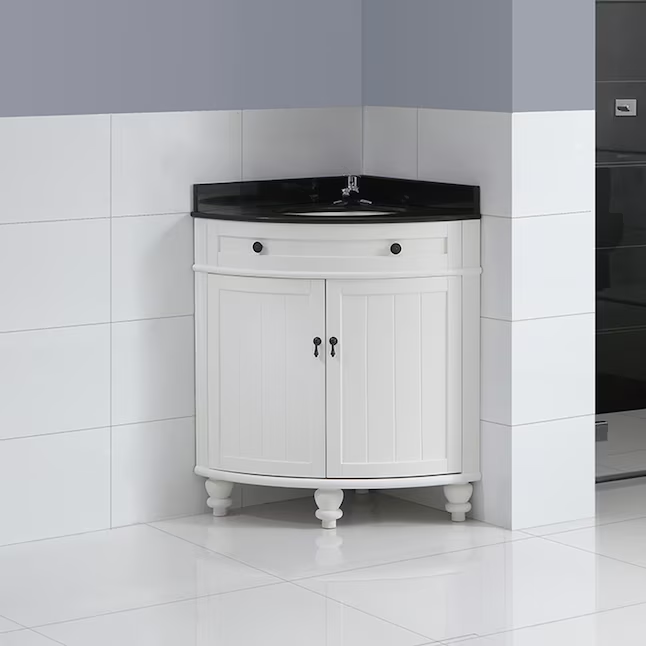
When the bathroom entry is tight, a standard vanity can create a traffic jam. A corner sink is a clever small bathroom layout solution that keeps the center of the room open and circulation smooth. It’s especially useful in powder rooms and narrow layouts where every inch is negotiating for survival.
Choose a compact wall-mounted corner sink to keep the visual footprint light. Pair it with a mirrored medicine cabinet above for hidden storage and function. This layout is proof that you don’t need a huge vanity to have a practical, stylish setup that actually works day to day.
4) The Walk-In Shower Swap (Goodbye, Bulky Tub)
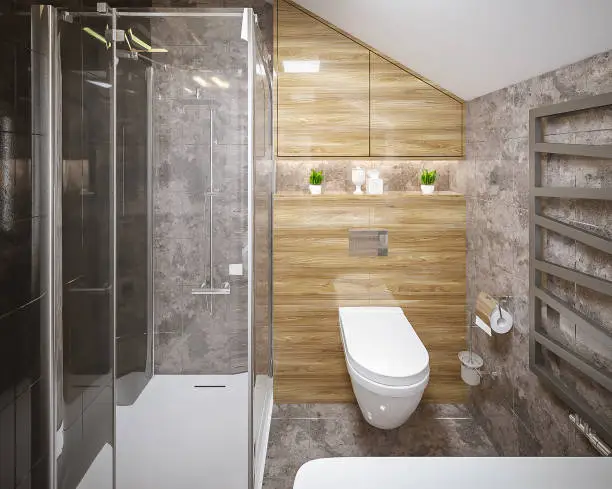
In many homes, replacing a tub-shower combo with a glass walk-in shower is the biggest upgrade you can make to a small bathroom layout. Tubs are visually heavy and physically large. A frameless shower opens up sightlines and makes the room feel more breathable right away.
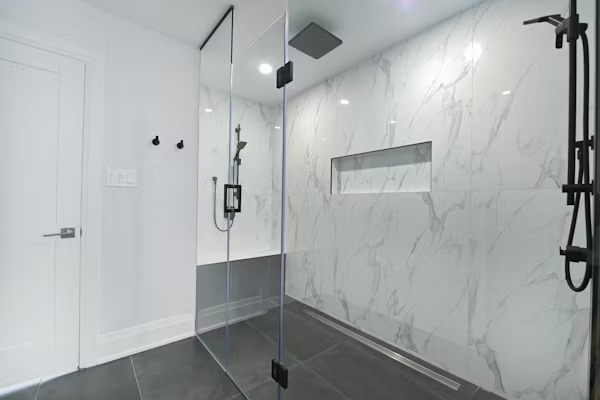
If you still need a tub for kids, keep one in another bathroom and let this one be your efficiency hero. Use large-format tile and minimal hardware to keep things sleek. A curbless or low-threshold shower further enhances flow and makes the whole layout feel contemporary and spacious.
5) The Floating Vanity Layout for More Floor Visibility
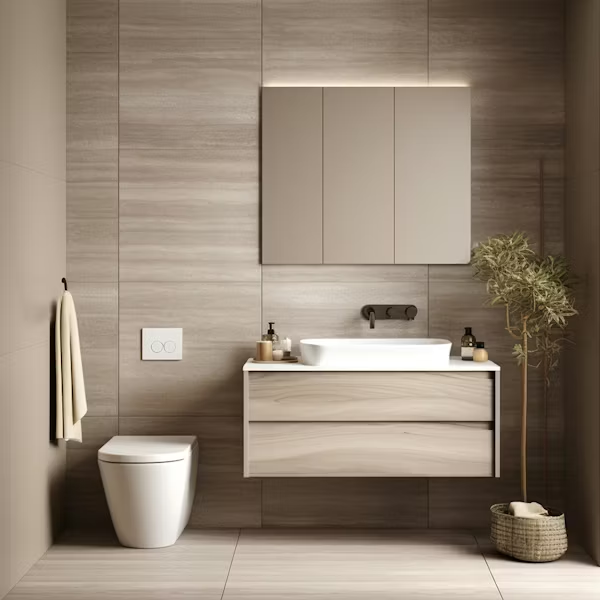
A floating vanity is a superstar in any small bathroom layout because it exposes floor underneath, which tricks the eye into seeing more space. It also gives your bathroom a modern, airy vibe without sacrificing style. Plus, cleaning under it is significantly less annoying.
Choose a vanity depth that works for your room—compact but still functional. Add drawers instead of open shelves if you want cleaner visual lines. Pair with wall-mounted faucets or slim fixtures to save counter room. This layout move delivers both practical storage and a lighter, less cluttered look.
6) The Narrow Galley Bathroom Layout Done Right
Galley bathrooms get a bad reputation, but a well-planned small bathroom layout in this shape can be incredibly efficient. Keep fixtures aligned on opposite walls with clear pathways between. Think sink and toilet on one side, shower on the other, and no oversized pieces blocking movement.
Use a slim vanity and wall-mounted accessories to preserve elbow room. Vertical storage and recessed niches help avoid floor clutter. In long, tight rooms, your goal is uninterrupted visual flow from door to back wall. When done well, a galley bathroom can feel intentional, not cramped.
7) The Toilet-Behind-Partition Trick
If your bathroom opens directly to the toilet view, the layout can feel awkward and exposed. A half-height partition wall or frosted glass divider improves privacy without closing off the room. This small bathroom layout trick adds structure and makes the space feel more designed.
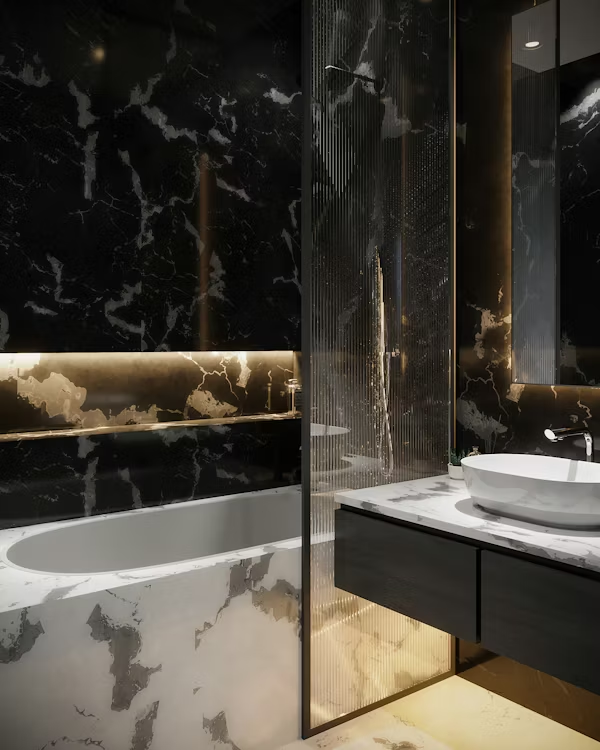
Place the partition between vanity and toilet, or between entry and toilet depending on your floor plan. It can also create a mini ledge for décor, toiletries, or extra hand towels. You get better zoning, better visual hierarchy, and fewer direct sightline surprises when someone opens the door.
8) The One-Wall Compact Layout for Ultra-Small Rooms
When space is extremely limited, grouping everything along one wall can be the most logical small bathroom layout. It keeps plumbing efficient and leaves one side open for movement. This approach works well in converted closets, micro-apartments, or secondary bathrooms with tiny footprints.
Use a wall-mounted toilet and compact sink to maximize floor visibility. Add recessed shelves above the toilet or in the shower wall for storage without bulk. A large mirror across from the fixtures can make the room feel wider. With tight dimensions, layout discipline is what creates comfort.
9) The Zoning Layout: Dry Side vs. Wet Side
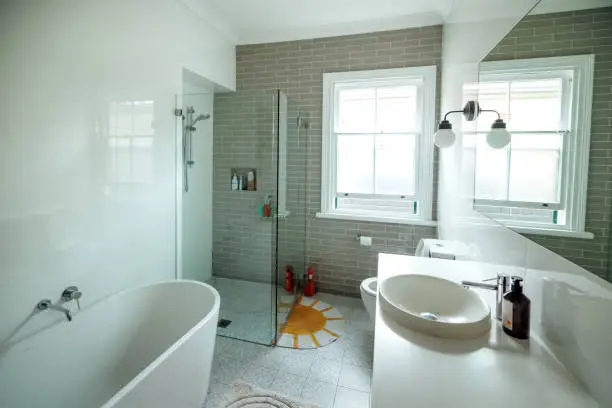
In a high-functioning small bathroom layout, zoning is everything. Divide the room into a wet side (shower/bath) and a dry side (vanity/toilet/storage). This helps with flow, keeps moisture more controlled, and makes the room easier to use when more than one person is involved.
Even subtle zoning—through tile changes, lighting, or fixture alignment—improves usability. You can keep morning routines moving because one person can shower while another uses the sink. In tiny bathrooms, smart zones create the illusion of separate functional areas, even when space is tight.
10) The Mirror-and-Lighting Layout Illusion
Layout is not only where fixtures go—it’s also what your eye perceives first. A large mirror and layered lighting can completely change how a small bathroom layout feels. Mirrors extend sightlines, while good lighting removes dark corners that make rooms feel boxed in.
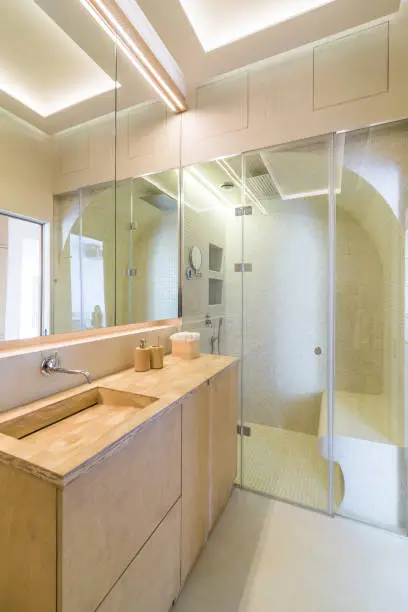
Install vertical sconces or side lighting near the mirror for even illumination and less shadow. If possible, reflect a window or bright wall to amplify natural light. This visual strategy doesn’t add square footage, but it absolutely changes the spatial experience. In tiny bathrooms, perception is powerful.
11) The Storage-Integrated Layout (No More Random Bins)
A great small bathroom layout plans storage from day one instead of adding plastic bins in panic mode later. Integrate recessed niches, mirrored medicine cabinets, slim towers, and under-vanity drawers directly into the flow. That way, essentials are accessible without creating clutter.
When storage is embedded into the layout, countertops stay clear and movement stays easy. Keep high-use items near the vanity, backup supplies in higher cabinets, and cleaning products below sink level. Functionally placed storage means your layout keeps working long after the “new bathroom” excitement fades.
12) The Symmetry Layout for Instant Calm
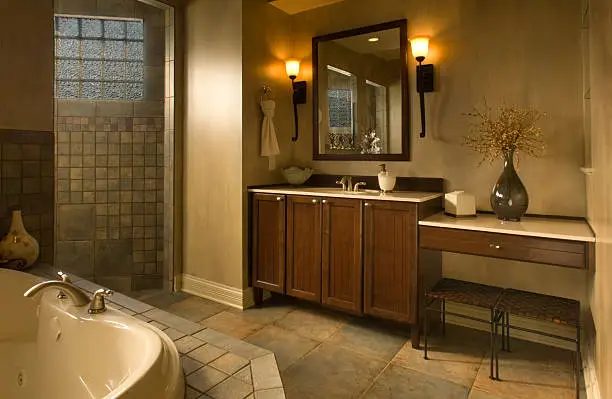
Small spaces can feel chaotic fast, especially with too many visual interruptions. A symmetrical small bathroom layout creates balance and calm, even in compact footprints. Center the mirror over the vanity, align sconces evenly, and keep hardware and finishes consistent across the room.
Symmetry helps the brain read the space as orderly, which makes it feel larger and cleaner. You don’t need perfect architectural symmetry—just visual consistency in key zones. This is especially helpful in powder rooms, where guests notice details quickly. Clean lines and aligned elements make tiny bathrooms feel intentional.
Bonus: How to Choose the Right Small Bathroom Layout for Your Home
Not every idea works in every room, so pick your small bathroom layout based on how you actually use the space. Ask yourself: Is this a daily-use family bathroom, a guest powder room, or a primary ensuite? Different needs require different priorities.
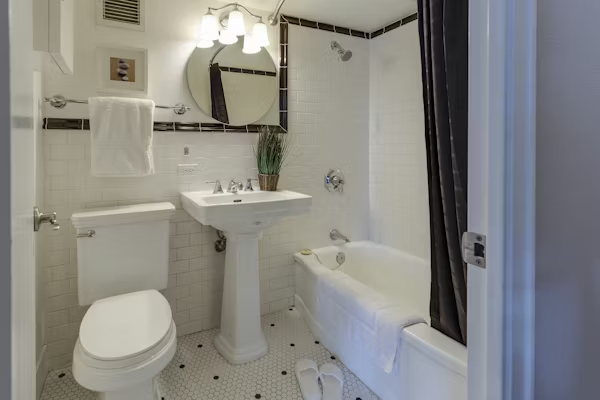
For family bathrooms, storage and durability come first. For guest baths, visual impact and easy maintenance usually matter more. If you’re remodeling, keep plumbing changes minimal where possible to control cost. If you’re not remodeling, focus on layout-adjacent upgrades like door swing, vanity style, and zoning through furniture and lighting.
Measure everything before buying anything. Then measure again because optimism is not a measurement system.
Common Small Bathroom Layout Mistakes to Avoid
Even the prettiest bathroom fails if layout basics are ignored. Here are common mistakes that undermine a small bathroom layout:
- Oversized vanities that block circulation
- Inward-swing doors that crash into fixtures
- Too little lighting around the mirror
- Storage added as an afterthought
- Heavy visual clutter on walls and counters
Avoid these, and even a tiny bathroom can feel efficient and polished.
Final Thoughts
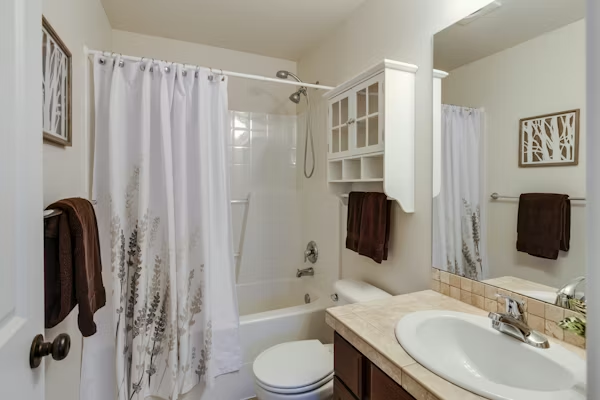
A tiny bathroom does not have to feel like a compromise. With the right small bathroom layout, you can make the room feel larger, function better, and look far more elevated than its square footage suggests. The key is intentional planning: better flow, smart fixture choices, integrated storage, and visual calm.
Start with one or two layout improvements that solve your biggest pain points right now. Maybe that’s swapping your vanity, changing your door swing, or rethinking shower placement. Build from there. Great design isn’t about having more space—it’s about making your space work harder and look better while doing it.
And if your bathroom currently requires yoga-level flexibility to use the sink, take heart. The right small bathroom layout can absolutely change your daily routine for the better.