
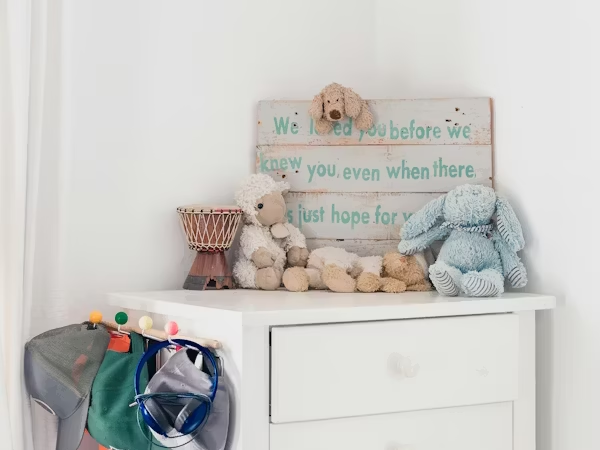
Let’s be honest about boys’ rooms: they’re probably disaster zones featuring Lego landmines, sports equipment explosions, and that mysterious smell you can’t quite identify but have learned to live with. You had visions of adorable coordinated spaces when you were pregnant, but reality delivered rooms that look like toy stores after earthquakes. But boys’ rooms can actually be functional, stylish, and durable enough to withstand the chaos that is childhood. These boys room ideas create spaces that work for real kids who jump on beds, use floors as closets, and consider “clean” a completely subjective concept. Whether you’re designing for a toddler, tween, or full-blown teenager who grunts instead of speaking, these ideas will help you create rooms that are both practical and cool enough that your son might actually care about his space.
1. Choose Durable, Washable Paint in Neutral Base Colors
Boys are basically chaos agents who touch everything with suspiciously sticky hands. Paint selection represents foundational boys room ideas that affect long-term maintenance and flexibility. Choose washable, scrubbable paint in neutral base colors—gray, navy, sage green, or warm beige—that hide minor scuffs while providing timeless backdrops. These sophisticated neutrals work from toddler years through teenage phases without feeling babyish or requiring constant repainting when interests change. Add personality through easily changeable elements like bedding, artwork, and accessories rather than committing to dinosaur-themed walls he’ll outgrow by age seven. The neutral foundation saves money, reduces repainting frequency, and creates mature spaces that grow with your child. Plus, scrubbable paint means you can actually clean handprints, crayon marks, and whatever else ends up on walls when supervision lapses for three minutes.
2. Incorporate Heavy-Duty Storage Systems
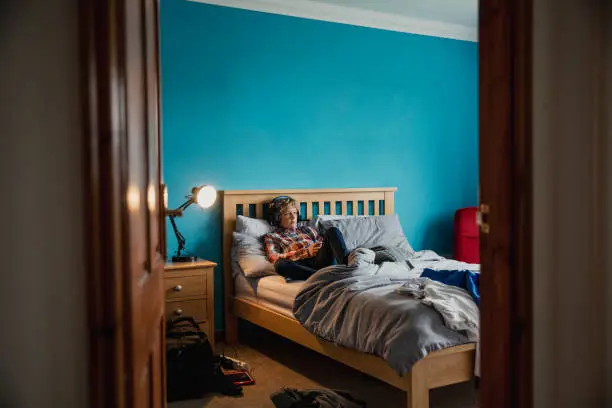
Boys accumulate stuff at alarming rates—toys, books, sports equipment, gaming gear, and collections of rocks/sticks/random objects they insist are treasures. Robust storage systems are essential boys room ideas for maintaining any semblance of organization. Install sturdy shelving units that handle weight without collapsing when overloaded. Add large bins or baskets for toy storage—the easier cleanup is, the more likely it’ll actually happen. Use closet organizers maximizing vertical space and providing designated homes for clothes, shoes, and accessories. Label everything if you’re optimistic about cooperation, though results may vary based on your child’s age and general willingness to participate in household organization. The goal is systems so simple that even tired, rushed mornings allow for quick tidying. Durable storage withstands the abuse boys inflict on furniture through creative uses you never imagined possible.
3. Create a Homework/Creative Zone
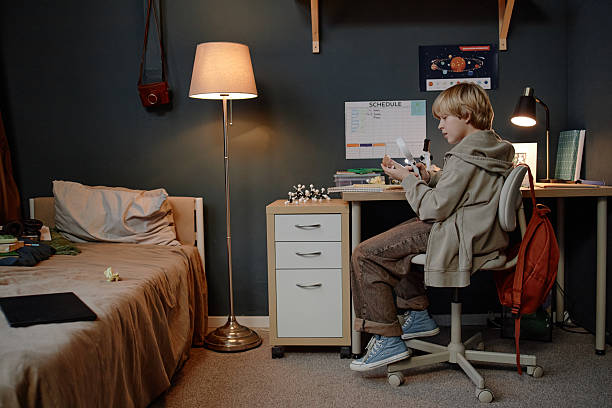
Dedicated workspace represents practical boys room ideas supporting school success and creative pursuits. Install a sturdy desk with adequate surface area for homework, crafts, or Lego engineering projects that consume entire tabletops. Add task lighting preventing eye strain during late-night homework sessions or early morning gaming. Include storage for school supplies, art materials, and whatever hobbies currently consume your son’s attention. Ergonomic seating matters—growing bodies need proper support, and uncomfortable chairs guarantee homework battles. Position desks near windows for natural light when possible, but away from beds to psychologically separate work from sleep zones. As boys age, workspace becomes increasingly important, evolving from coloring stations to actual study areas to gaming command centers. Invest in quality furniture that adapts through these phases rather than replacing every few years.
4. Add Themed Elements That Can Evolve
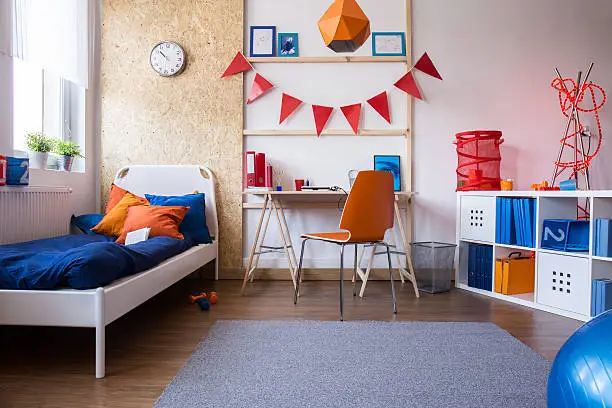
Themes are fun but kids outgrow them faster than you can say “I just finished decorating.” Smart boys room ideas incorporate interests through easily changeable elements rather than permanent installations. Display current passions—sports, superheroes, dinosaurs, space—through removable wall decals, posters, bedding, and accessories. When interests inevitably shift, you’re swapping out a few items rather than repainting entire rooms or replacing furniture. Use neutral furniture and walls as canvases accepting whatever theme currently dominates. This approach prevents the expensive redecoration cycle while honoring your son’s evolving interests. He feels heard and represented in his space without you mortgaging your house to accommodate each new obsession. The flexibility saves money and sanity while creating rooms that genuinely reflect the humans occupying them.
5. Incorporate Durable Flooring That Handles Abuse
Boys are hard on floors—they drop things, spill things, and generally treat floors like they’re indestructible. Flooring choices represent crucial boys room ideas affecting both aesthetics and maintenance. Hardwood or luxury vinyl plank flooring handles abuse while looking good and cleaning easily. Add washable area rugs providing softness for play while protecting floors underneath. Avoid light carpeting unless you enjoy permanent stains as décor—boys and white carpet are mortal enemies. Durable, easy-to-clean flooring saves time and preserves sanity when inevitable spills, drops, and mysterious sticky spots appear. The investment in quality flooring pays dividends through years of abuse it’ll endure while still looking acceptable. Your floors survive childhood, which is honestly asking a lot but achievable with proper material choices.
6. Include Flexible Seating Beyond the Bed
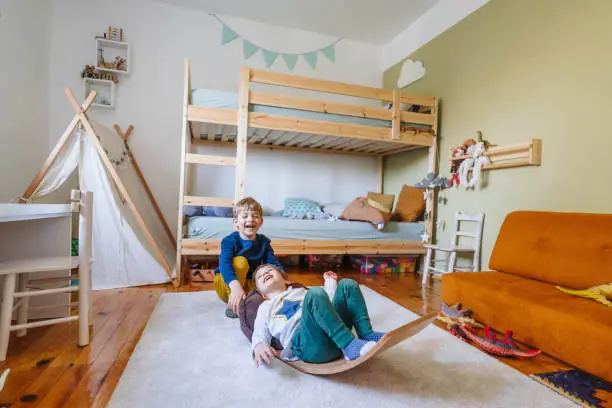
Boys need places to hang out with friends, read, game, or just collapse dramatically when life is “so unfair.” Flexible seating represents versatile boys room ideas accommodating various activities. Bean bags, floor cushions, or gaming chairs provide comfortable spots without permanent floor commitment. Small sofas or futons work in larger rooms, offering seating that converts to guest sleeping when friends visit. The casual, moveable nature means seating adapts as needs change—gaming setup today, reading nook tomorrow, wrestling arena next week when you’re not looking. Durable, washable fabrics are essential because boys are somehow always covered in substances you’d rather not identify. Multiple seating options make rooms functional social spaces rather than just sleeping quarters, which becomes increasingly important as boys age and actually want to spend time in their rooms.
7. Add Sports Equipment Storage Solutions
If your son plays sports, equipment takes over your house faster than you can say “soccer season.” Dedicated sports storage represents organizational boys room ideas preventing equipment explosions. Install wall-mounted hooks for hanging balls, helmets, and bags. Use tall bins or baskets for bats, sticks, and other gear. Add shelving for trophies and medals if your son enjoys displaying achievements. The goal is keeping equipment contained, accessible, and not scattered across your entire home like a sporting goods store explosion. Designating specific sports storage in bedrooms means gear stays out of entryways, living rooms, and your car where it migrates and breeds mysteriously. Your son can actually find his equipment when needed, and you reclaim your living space from athletic gear occupation.
8. Incorporate Growth-Friendly Furniture
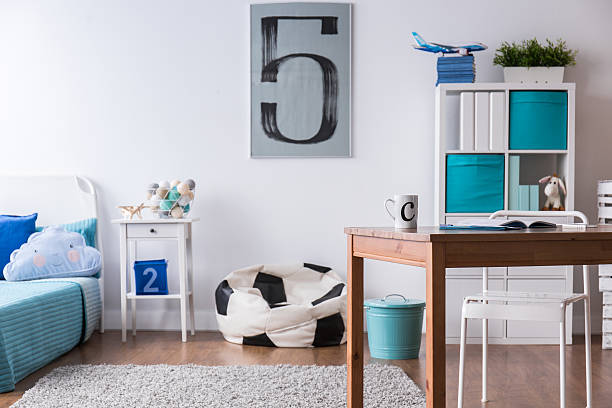
Boys grow at alarming rates, outgrowing clothes, shoes, and apparently furniture. Adjustable or extendable furniture represents smart boys room ideas maximizing longevity. Choose beds that transition from toddler to adult sizes, or invest in full or queen beds from the start avoiding multiple replacements. Select dressers and desks that work across age ranges rather than precious children’s furniture screaming “nursery.” The initial investment in quality, versatile pieces costs more upfront but saves money long-term by eliminating constant replacement cycles. Your furniture adapts as your son grows from small child to towering teenager who eats everything and needs adult-sized everything. Planning for growth prevents the furniture mismatch phase where your teen is too large for his childhood furniture but you haven’t budgeted for replacements yet.
9. Create Display Space for Collections and Achievements
Boys collect things—rocks, Lego sets, action figures, sports memorabilia, or whatever random objects capture their attention. Display-focused boys room ideas honor these collections while maintaining organization. Install floating shelves for Lego creations, action figure displays, or book collections. Add bulletin boards or clipboards for artwork, certificates, and achievements. Use shadow boxes for special memorabilia or three-dimensional treasures. The display space makes boys feel their interests matter and are valued, while providing designated homes preventing collections from overtaking every surface. Rotate displays as interests change, storing outgrown collections for nostalgia while making room for current passions. Your son’s room reflects his personality and achievements rather than looking like generic catalog spaces, which matters more than you might think for self-esteem and sense of ownership.
10. Add Adequate Lighting for Various Activities
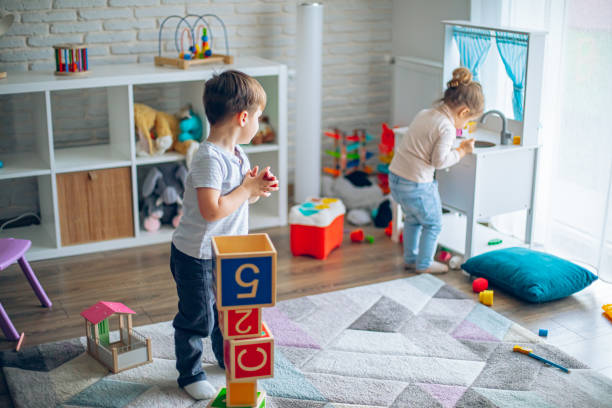
One overhead light is insufficient for rooms serving multiple purposes. Layered lighting represents essential boys room ideas supporting different activities. Overhead lighting provides general illumination. Desk lamps offer task lighting for homework or hobbies. Reading lights near beds enable nighttime reading without disturbing the whole room. Consider strip lighting or color-changing bulbs for older boys who enjoy customizing ambiance—controllable through apps, these lights let them create different moods without permanent installation. Dimmer switches allow adjustment from bright morning light to softer evening illumination. Good lighting prevents eye strain, supports various activities, and makes rooms more functional throughout the day. Your son can actually see what he’s doing, which reduces accidents, improves homework quality, and generally makes life easier for everyone.
11. Include Personal Touches That Make It His Space
Pinterest-perfect rooms are lovely but generic boys room ideas often lack personality. Personal elements make rooms feel genuinely his rather than decorated at him. Display his artwork, photos of friends and family, or posters of current interests. Incorporate his input on color choices, bedding patterns, or furniture arrangement when age-appropriate. Let him participate in decorating decisions—even young boys have opinions about their spaces, and honoring those builds ownership and pride. The room reflects his personality rather than your Pinterest board, which matters significantly for how much he cares about maintaining it. Boys who feel ownership of spaces are marginally more likely to keep them acceptable, though miracles aren’t guaranteed. The personal touches transform generic bedrooms into rooms that feel uniquely his, supporting identity development and sense of home.
12. Plan for Technology Integration

Modern boys live partially in digital worlds whether we like it or not. Technology-friendly boys room ideas acknowledge this reality while maintaining healthy boundaries. Ensure adequate outlets for devices, gaming systems, computers, and whatever else plugs in. Consider charging stations keeping devices organized and preventing the tangle of cables covering every surface. Plan desk placement accommodating monitors or dual screens if your son games or creates digitally. Include cable management solutions hiding wires and maintaining cleaner aesthetics. For older boys, smart lighting or voice assistants might enhance functionality. The goal is supporting healthy technology use with appropriate infrastructure rather than fighting losing battles against the digital age. Your son’s room accommodates his technological reality while you maintain whatever screen time boundaries feel appropriate for your family.
Safety Considerations for Boys Room Ideas
Whatever boys room ideas you implement, safety remains paramount. Anchor furniture to walls—boys climb things regardless of whether they should. Ensure bunk beds meet safety standards with appropriate guardrails. Keep window cords out of reach. Use outlet covers for younger boys. Avoid heavy items on high shelves that could fall during rough play. Ensure adequate lighting preventing trips and falls. The energy boys bring to everything—jumping, wrestling, creative climbing—requires anticipating potential hazards and eliminating them before injuries occur. Safe rooms let boys be boys without unnecessary risks.
Age-Appropriate Evolution

The best boys room ideas adapt as your son grows. Toddler rooms need toy storage and durable everything. Elementary-age rooms require homework spaces and hobby areas. Tween rooms benefit from style upgrades and increased storage. Teen rooms need privacy, technology infrastructure, and mature aesthetics they won’t be embarrassed by. Plan for this evolution when making initial decisions, choosing elements that grow with your child rather than requiring complete overhauls every few years.
Budget-Friendly Strategies
Boys room ideas don’t require unlimited budgets. Focus spending on quality furniture lasting years. Economize on decorative elements changing frequently as interests evolve. DIY what you can—painted accent walls, custom artwork, or refinished furniture. Shop secondhand for items receiving hard use anyway. Start with essentials, adding elements gradually as budget allows. Even modest investments in organization and personalization create significant improvements in functionality and your son’s connection to his space.
Your Boys Room Transformation
The right boys room ideas create spaces supporting your son’s growth, interests, and daily activities while surviving the chaos that is childhood. Whether you’re designing for a toddler tornado, an elementary explorer, or a teenage hermit, thoughtful planning creates rooms that work for real kids living real lives.
Start by identifying your biggest challenge—storage chaos, outgrown themes, lack of workspace, or general disorganization. Implement boys room ideas addressing those specific issues first, then build from there as time and budget allow.
The best boys room ideas balance durability with style, creating spaces that handle abuse while looking intentional and reflecting your son’s personality. Your goal is rooms supporting his development and daily activities while requiring minimal maintenance and surviving until he moves out—which feels impossibly far away until suddenly he’s packing for college and you’re wondering where the time went.

Stop accepting bedroom chaos as inevitable. Implement these boys room ideas thoughtfully, involve your son in age-appropriate ways, and create spaces that work for your family. Your son gets a room he’s proud of, and you get functional organization that makes daily life slightly less chaotic. That’s worth the effort.
Now stop reading about boys room ideas and start planning your transformation. Measure the space, assess the chaos, and choose solutions matching your son’s age, interests, and your sanity preservation requirements. His improved room awaits—right after you navigate that Lego minefield covering his current floor. Good luck. You’ll need it.