

The boundary between indoor and outdoor living continues to blur as homeowners seek to create seamless transitions that celebrate both comfort and nature. Modern home and garden decor has evolved beyond traditional compartmentalized thinking, embracing a holistic approach that treats your entire property as one cohesive living space. This integration philosophy transforms how we think about decorating, encouraging designs that flow naturally from kitchen to patio, from living room to garden sanctuary.
The Philosophy of Unified Home and Garden Decor
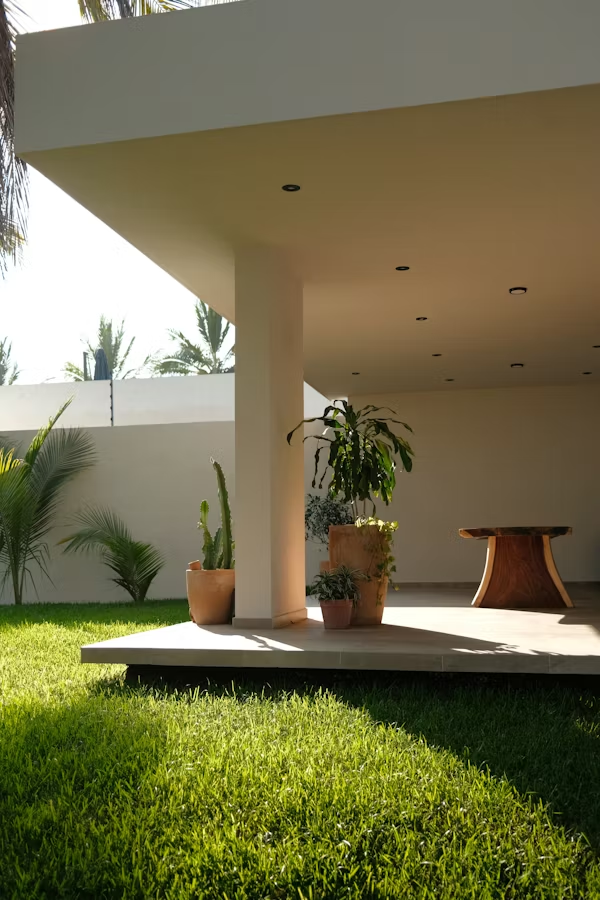
Successful home and garden decor integration begins with understanding that your indoor and outdoor spaces should tell the same story. This doesn’t mean identical color schemes or matching furniture sets, but rather a thoughtful continuity of style, mood, and functionality that makes moving between spaces feel natural and intentional.
Consider how light moves through your home throughout the day and how that same light interacts with your garden spaces. A kitchen window that frames morning garden views should incorporate elements that celebrate that connection—perhaps herb plantings on the windowsill that mirror the garden’s herb spiral, or pottery that echoes the textures found in your outdoor hardscaping.
The most compelling home and garden decor schemes recognize that modern living extends far beyond traditional room boundaries. Your dining room might flow onto a covered porch, which then transitions to an outdoor kitchen, finally opening to a landscaped entertainment area. Each zone should feel distinct yet connected, creating a journey through different experiences while maintaining design coherence.
Color Psychology in Home and Garden Decor Coordination
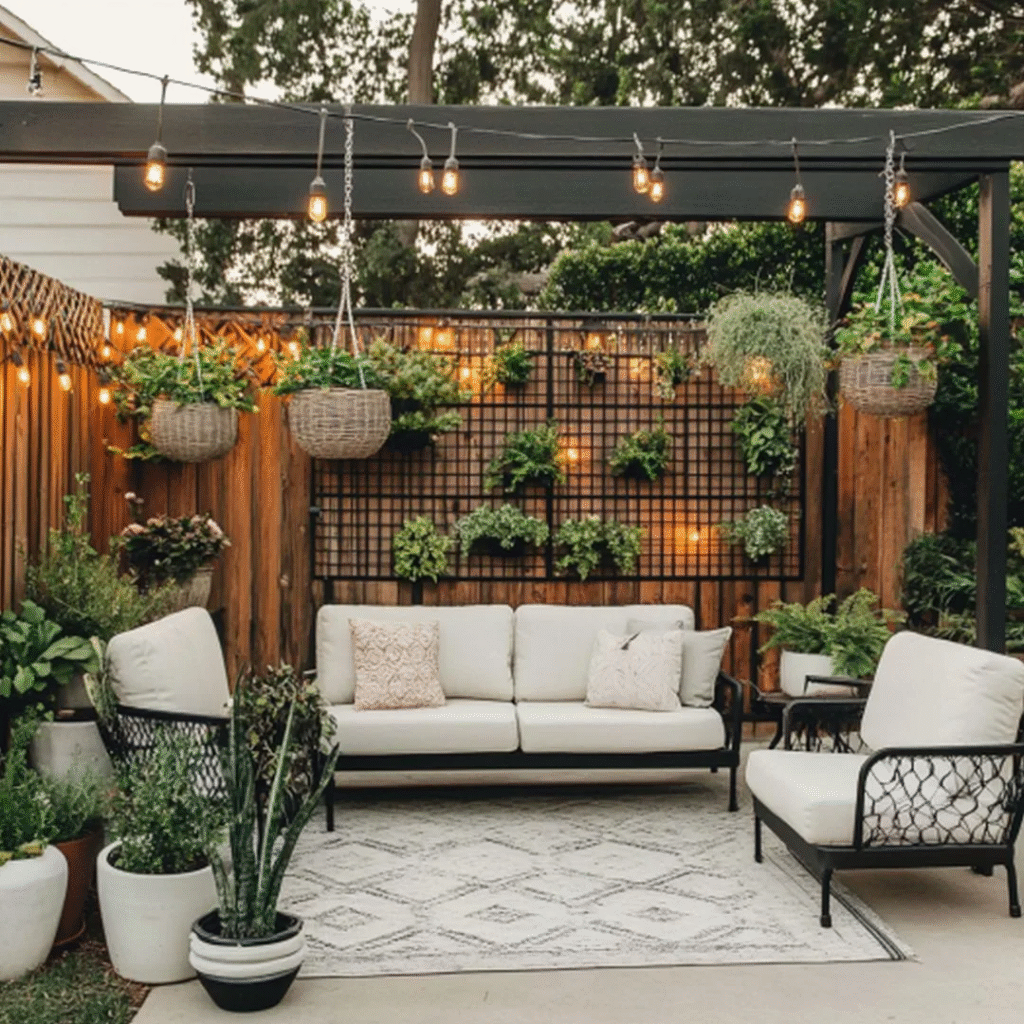
Color serves as the most powerful tool for creating continuity between indoor and outdoor spaces. However, effective home and garden decor color coordination requires understanding how colors behave differently in various lighting conditions and seasonal contexts.
Indoor paint colors that appear warm and inviting under artificial lighting might look completely different when viewed from an outdoor perspective during bright daylight hours. Similarly, garden colors that seem vibrant in full sun can appear muted when viewed through windows or glass doors. The key is selecting a palette that performs beautifully in all viewing conditions and seasonal changes.
Earth-toned neutrals provide the most reliable foundation for unified home and garden decor schemes. These colors—warm grays, soft browns, muted greens, and cream tones—create sophisticated backdrops that allow both indoor furnishings and garden plantings to shine. Layer these neutrals with accent colors that can be easily updated seasonally through textiles, container plantings, and decorative accessories.
Consider creating signature color moments that appear both indoors and outdoors. A rich terracotta accent wall in your living room might be echoed in large ceramic planters throughout your garden spaces. Deep blue kitchen cabinetry could inspire a collection of blue-glazed garden pottery or painted outdoor furniture. These intentional color connections create visual rhythm that unifies your entire property.
Texture and Material Continuity
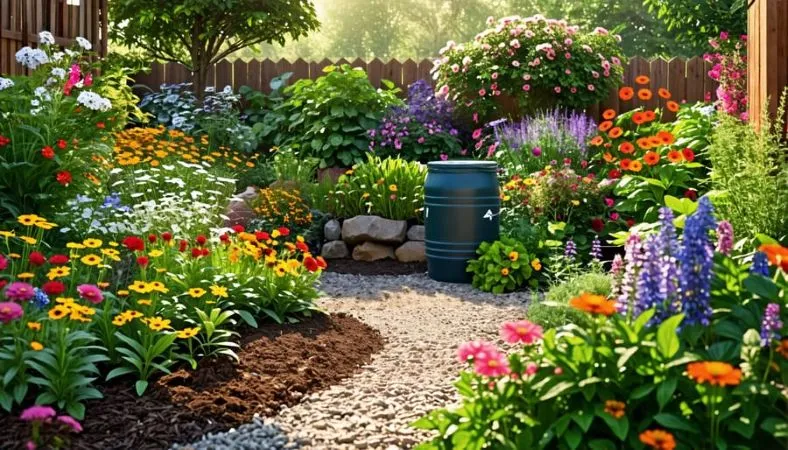
The most sophisticated home and garden decor approaches pay careful attention to texture and material relationships. Natural materials like wood, stone, and metal provide obvious bridges between indoor and outdoor environments, but the key lies in using these materials thoughtfully rather than literally.
Reclaimed wood that appears as interior accent walls might inspire weathered teak outdoor furniture, creating connection without exact duplication. Natural stone used in interior fireplace surrounds could influence the selection of similar stone for garden pathways or retaining walls. The goal is creating material conversations that feel intentional rather than coincidental.
Textile choices play a crucial role in unified home and garden decor schemes. Indoor fabrics should be selected with an awareness of how they’ll appear when viewed from outdoor spaces, while outdoor textiles should complement rather than clash with interior design choices. Weather-resistant fabrics have evolved dramatically, now offering sophisticated patterns and textures that rival indoor counterparts.
Consider the tactile experience of moving between spaces. Smooth interior flooring might transition to textured outdoor stone, while rough natural fiber rugs indoors could inspire similar textures in outdoor cushions and throws. These sensory connections create subconscious comfort and design continuity.
Seasonal Adaptation Strategies
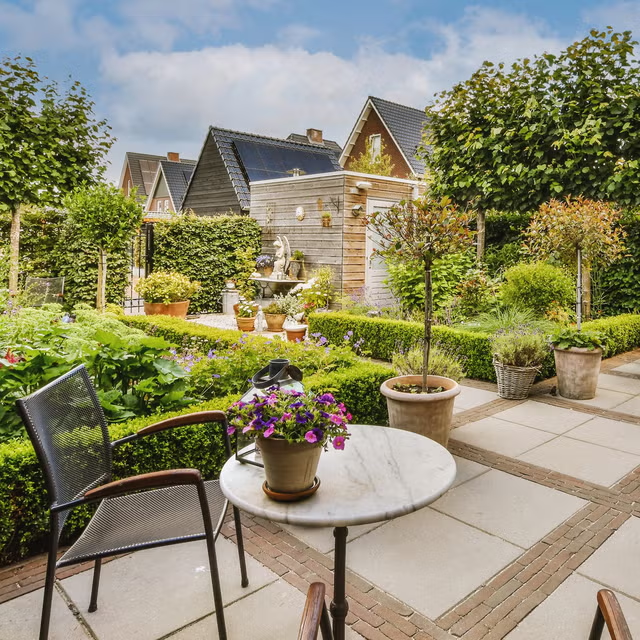
Unlike purely interior design, effective home and garden decor must account for dramatic seasonal changes that affect both indoor and outdoor environments. The most successful integrated designs plan for four distinct seasonal personalities while maintaining year-round continuity.
Spring home and garden decor integration celebrates renewal and fresh energy. This might mean introducing fresh greenery indoors that echoes emerging garden growth, or selecting indoor textiles in colors that complement spring bulb displays. Consider how spring cleaning and garden preparation can be coordinated activities that refresh both indoor and outdoor spaces simultaneously.
Summer integration focuses on extending living spaces and creating comfortable transitions between air-conditioned interiors and outdoor entertainment areas. This season demands careful attention to shade, ventilation, and heat management in both environments. Indoor cooling strategies should complement rather than conflict with outdoor comfort solutions.
Related Posts:
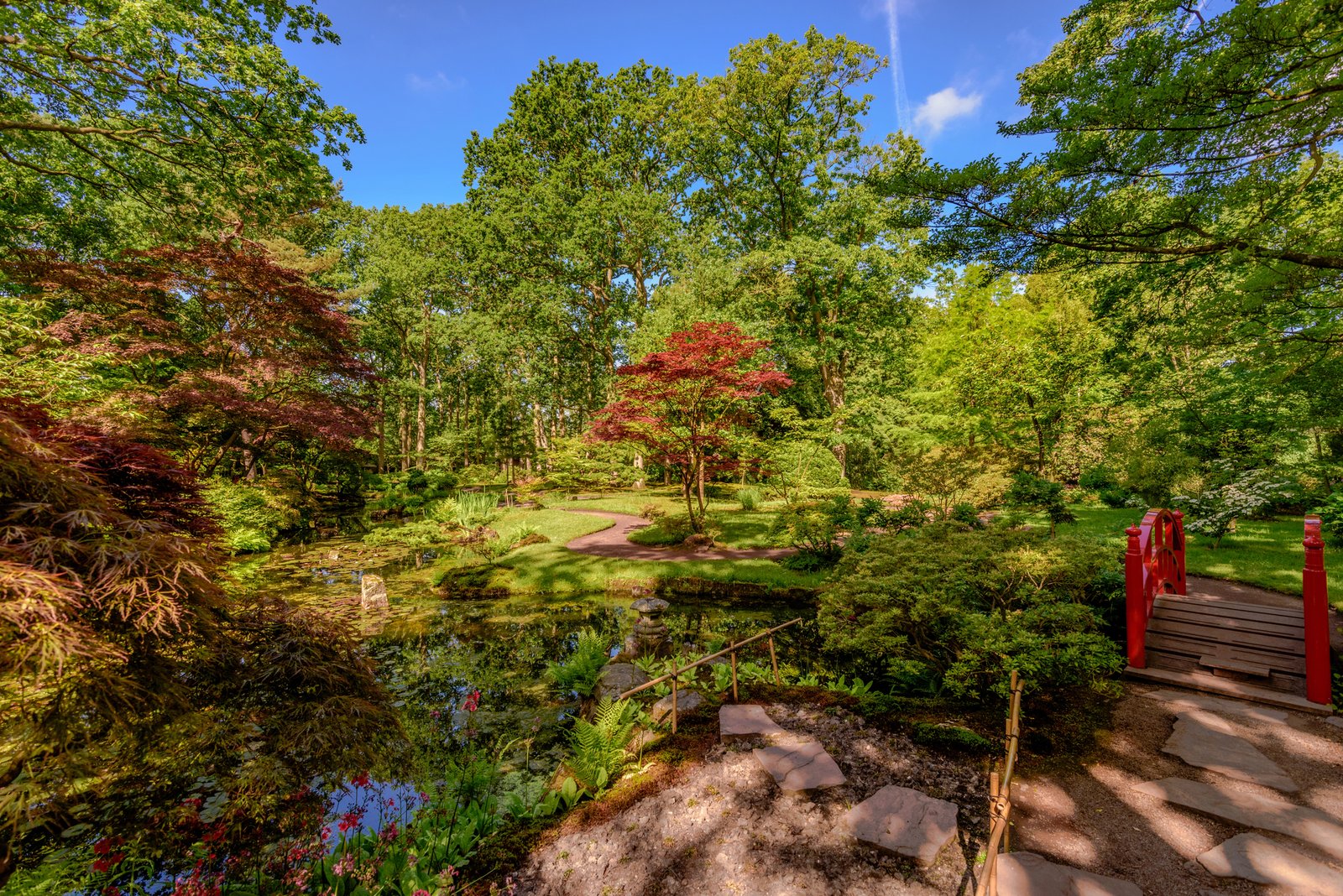
Autumn home and garden decor integration embraces the beauty of transition and harvest themes. Indoor decorative elements can celebrate the same materials appearing in garden spaces—gourds, branches, preserved leaves, and seasonal flowers that appear both in garden beds and interior arrangements. This season offers the richest opportunities for material sharing between indoor and outdoor spaces.
Winter integration challenges designers to maintain visual connections when outdoor spaces become less hospitable. Strategic lighting, evergreen plantings visible from indoors, and weather-resistant decorative elements ensure that garden views remain appealing throughout the dormant season.
Furniture and Functional Element Integration
Modern home and garden decor increasingly blurs the lines between indoor and outdoor furniture, with many pieces designed to function beautifully in both environments. This flexibility supports the fluid lifestyle that integrated design promotes.
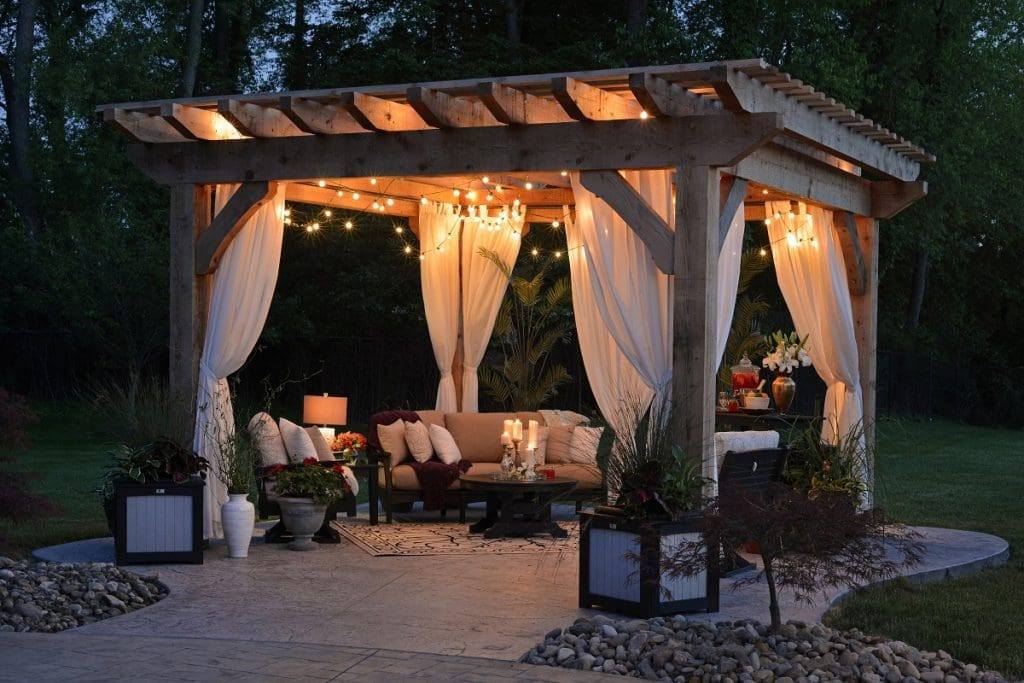
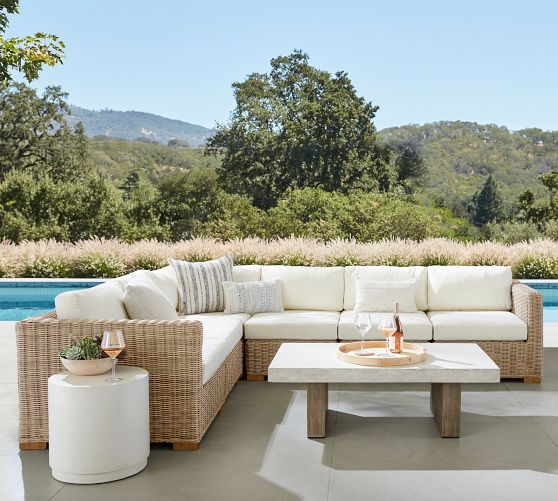
Covered outdoor spaces benefit from furniture that could easily function indoors—comfortable seating with weather-resistant cushions, dining tables that match interior design standards, and storage solutions that are both functional and attractive. These transitional pieces help create seamless flow between clearly indoor and clearly outdoor areas.
Indoor spaces that connect strongly to outdoor views should incorporate furniture and accessories that acknowledge those connections. A reading chair positioned to enjoy garden views might be upholstered in botanical prints or natural textures that echo outdoor elements. Interior storage solutions can house both indoor and outdoor entertaining supplies, supporting the flexible lifestyle that integrated design promotes.
Consider creating furniture arrangements that can be easily adapted for different seasons and activities. Lightweight indoor-outdoor pieces can be repositioned to take advantage of changing light patterns or to support different entertainment needs throughout the year.
Lighting Design for Integrated Spaces
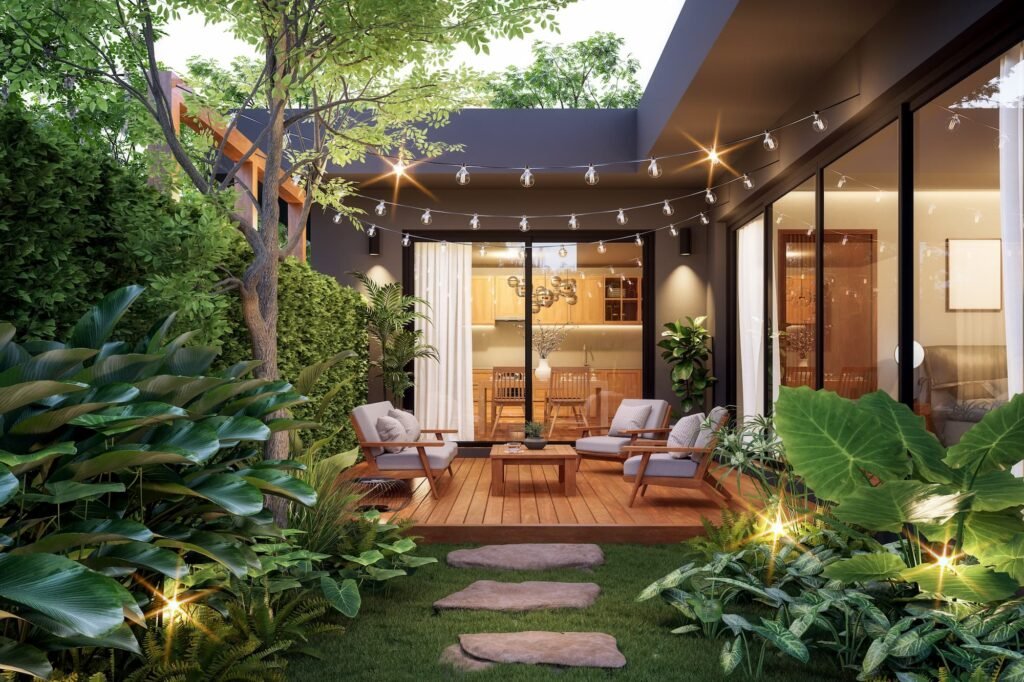
Thoughtful lighting design creates the strongest connections between indoor and outdoor environments, especially during evening hours when artificial illumination defines space and mood. Effective home and garden decor lighting schemes consider both functional needs and aesthetic continuity.
Interior lighting should be planned with awareness of how it appears from outdoor spaces. Large windows and glass doors essentially turn interiors into illuminated displays after dark, making indoor lighting choices part of the overall garden experience. Conversely, outdoor lighting should enhance rather than compete with interior ambiance when viewed from inside.
Layered lighting strategies work best for integrated spaces. Pathway lighting guides movement between areas while accent lighting highlights key features in both indoor and outdoor environments. Ambient lighting creates overall mood and comfort, while task lighting ensures functional areas remain usable regardless of natural light conditions.
String lights have become particularly effective for creating continuity between spaces. The same style of lighting can define outdoor entertainment areas while also being used indoors for special occasions, creating instant visual connections and adaptable ambiance.
Plant Life as Decorative Integration
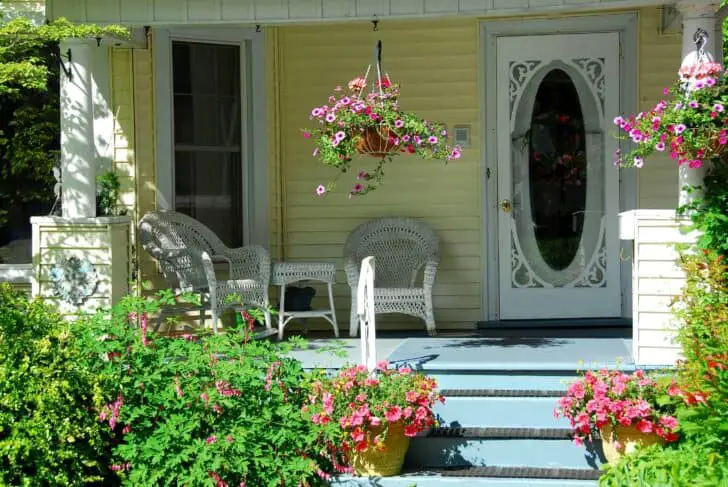
Nothing creates stronger connections between indoor and outdoor spaces than thoughtful use of plant life throughout your home and garden decor scheme. However, successful integration requires understanding how different plants perform in various conditions and how they contribute to overall design goals.
Indoor plants should be selected not just for their ability to thrive in interior conditions, but also for how they relate to outdoor garden plantings. This doesn’t mean identical species, but rather complementary colors, textures, and growth habits that create visual harmony when viewed together.
Container gardening provides the most flexible approach to plant integration. Large planters can house specimens that transition between indoor and outdoor locations seasonally, while smaller containers can be rearranged to create different vignettes and seasonal displays.
Herb gardens offer particular opportunities for integration, as they serve both decorative and functional purposes that span indoor and outdoor activities. Kitchen herb gardens visible from both sides of windows create strong visual connections while supporting cooking activities that might occur in either environment.
Entertaining and Lifestyle Integration
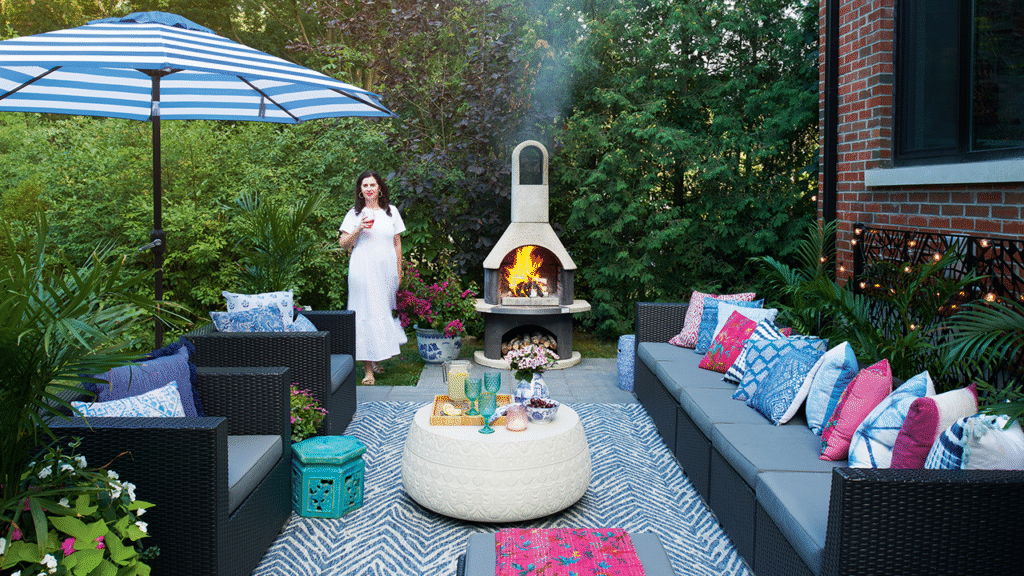
The ultimate goal of unified home and garden decor is supporting a lifestyle that moves fluidly between indoor and outdoor environments. This requires thinking beyond decoration to consider how integrated spaces support various activities and entertainment styles.
Flexible entertaining solutions work best for integrated designs. Serving pieces, tableware, and decorative accessories that perform well in both environments eliminate the need for separate indoor and outdoor collections. This approach also supports spontaneous entertaining and seasonal adaptability.
Storage solutions should accommodate the equipment and supplies needed for both indoor and outdoor activities. Transitional spaces like mudrooms, sunrooms, and covered porches can house items that support integrated living—outdoor cushions during off-season storage, garden tools that double as decorative elements, and entertaining supplies that work in any environment.
Technology Integration in Modern Home and Garden Decor
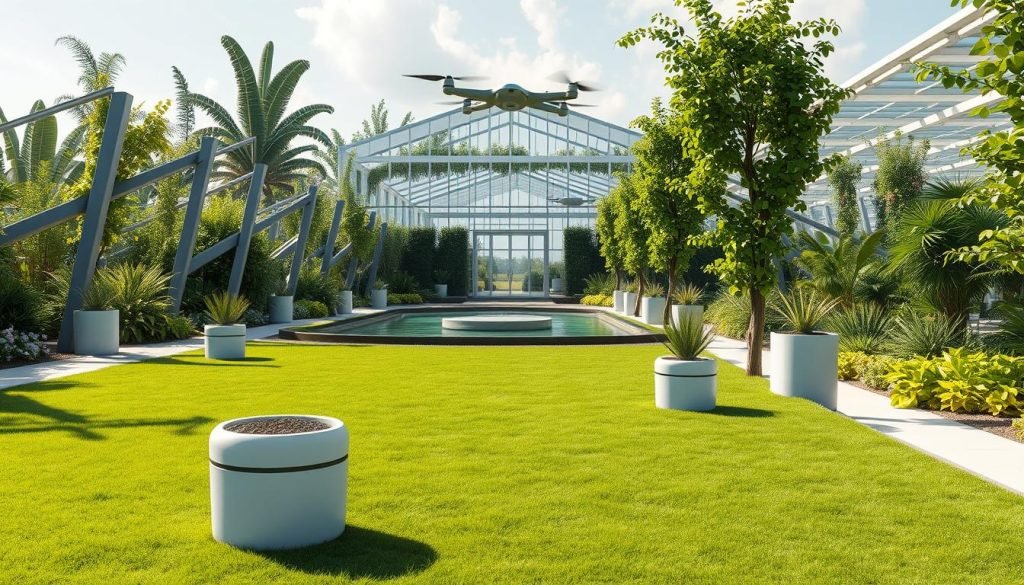
Contemporary integrated design must account for technology needs that span indoor and outdoor environments. Wi-Fi connectivity, electrical access, and entertainment systems increasingly need to function seamlessly throughout entire properties.
Outdoor technology integration should be planned with the same attention to aesthetics applied to indoor installations. Hidden wiring, weather-resistant components, and design-conscious mounting solutions ensure that technology enhances rather than detracts from overall home and garden decor schemes.
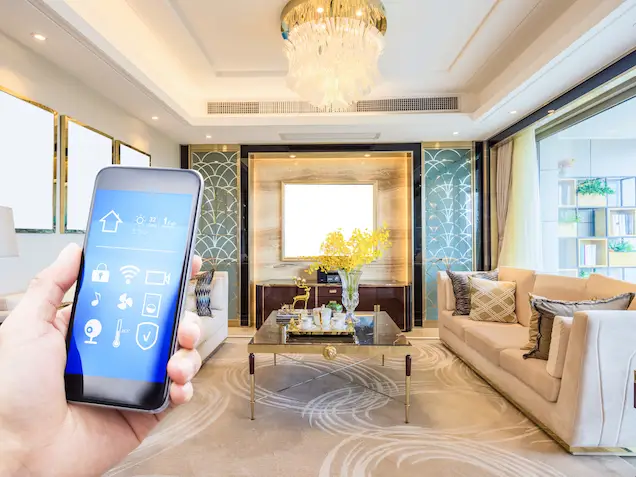
Smart home systems offer particular advantages for integrated design, allowing coordinated control of lighting, irrigation, climate, and entertainment systems that span multiple indoor and outdoor zones.
Conclusion: Living the Integrated Lifestyle
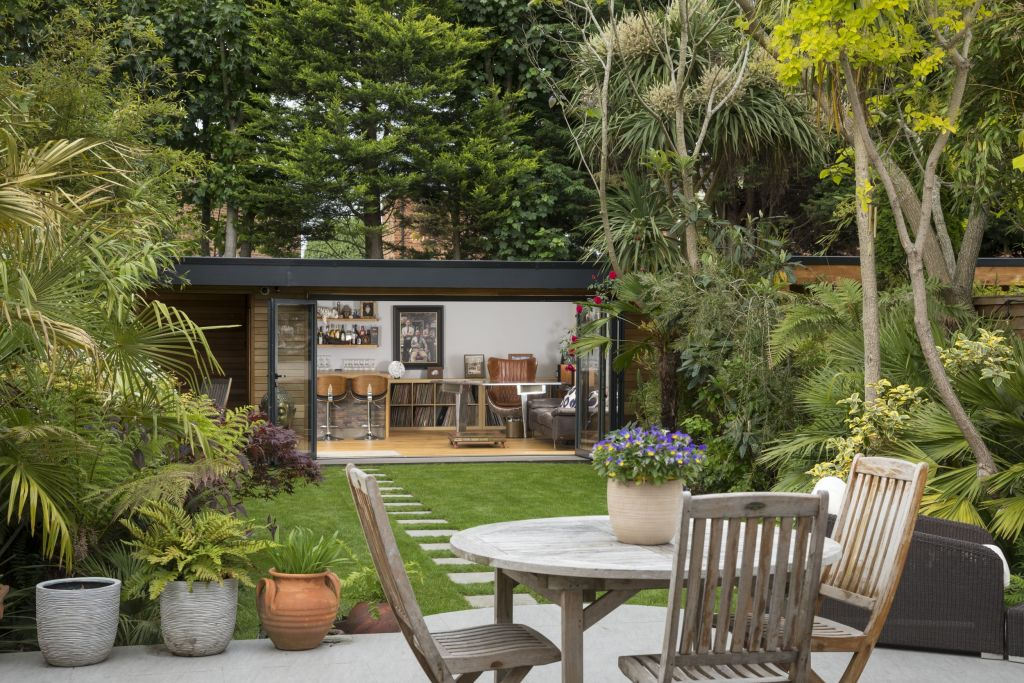
Successful home and garden decor integration creates more than beautiful spaces—it supports a lifestyle that celebrates the best of both indoor comfort and outdoor connection to nature. By thinking holistically about your entire property and planning for year-round enjoyment, you create environments that enhance daily life while providing flexibility for changing needs and preferences.
The most rewarding integrated designs develop over time, allowing you to discover how different spaces function together and how your lifestyle preferences evolve with the seasons. Start with a clear vision of how you want to live in your integrated spaces, then develop decorative solutions that support those goals while creating beauty that can be enjoyed from every vantage point.
Remember that the best home and garden decor integration feels effortless and natural, as if the design evolved organically rather than being imposed. Trust your instincts about what feels comfortable and beautiful, and allow your integrated spaces to develop the patina and personality that comes from being truly lived in and loved.