7 Entryway Ideas That’ll Make Coming Home Actually Feel Like Coming Home
Let’s have a moment of truth about entryways: yours is probably a dumping ground for shoes, coats, mail, and whatever else you’re carrying when you walk through the door. It’s the first thing you see when entering your home and the last thing you notice when leaving, yet somehow it’s the most neglected space in your house. Keys live on the floor, shoes pile up like a sneaker graveyard, and that console table you bought three years ago is buried under Amazon boxes and mail you’re pretending to sort through. But your entryway deserves better—it sets the tone for your entire home and desperately needs some organizational love. These entryway ideas transform chaotic dumping zones into functional, welcoming spaces that actually make you happy to come home rather than stressed by the mess greeting you daily. Whether you’re working with a spacious foyer or a tiny entry corner in your apartment, these ideas will help you create an entrance that’s both beautiful and genuinely useful.
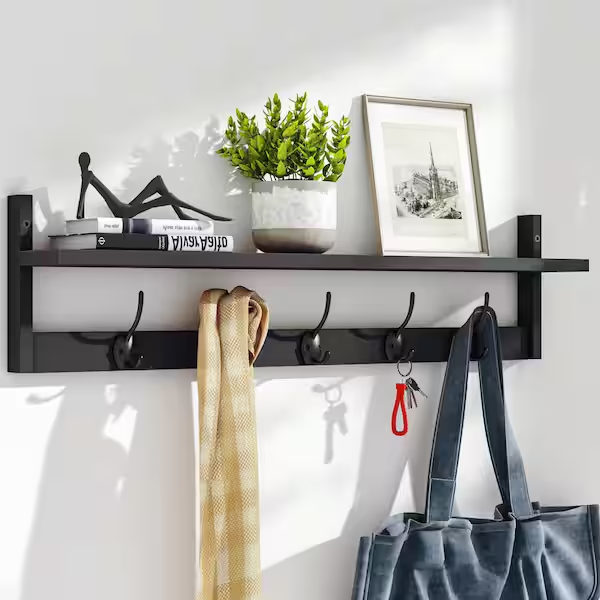
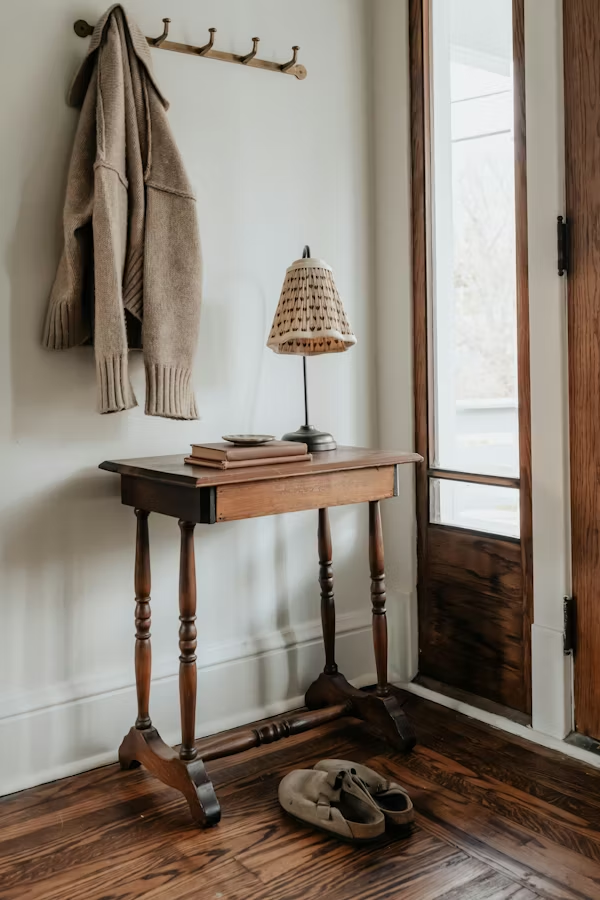
The simplest yet most impactful entryway ideas involve adding wall hooks for coats, bags, and keys. A row of sturdy hooks mounted at appropriate heights creates designated homes for items that otherwise pile on furniture or floors. Choose decorative hooks in brass, matte black, or brushed nickel that complement your hardware throughout the house. Install them on a backing board for visual cohesion, or mount directly to walls for minimal installation. The key is positioning hooks at heights that work—lower hooks for children’s backpacks, higher ones for adult coats, and maybe a special hook specifically for your bag so you stop losing it every morning. This approach costs minimal money, requires basic installation skills involving anchors and screws, and provides immediate organizational improvement. Your coats and bags finally have homes rather than becoming floor piles you step over daily while pretending that’s an acceptable way to live.
2. Add a Console Table for Surface and Storage
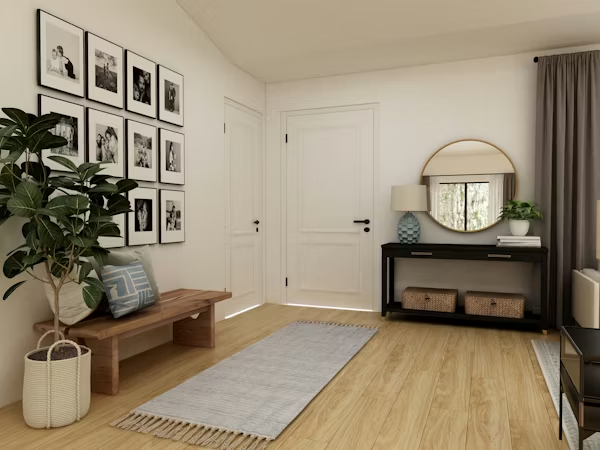
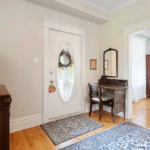
Console tables represent foundational entryway ideas that provide landing spots for keys, mail, and decorative items while anchoring the space visually. Choose tables with drawers or shelves underneath for concealed storage—the top looks styled and intentional while drawers hide the chaos of charging cables, spare masks, and whatever random items accumulate in entryways. Style the console surface thoughtfully with a table lamp for warm lighting, a catch-all tray for keys and sunglasses, and maybe a small plant or vase bringing life to the space. The area below can hold baskets for shoes, bins for pet supplies, or that stack of reusable shopping bags you keep forgetting to actually reuse. A mirror hung above the console creates the classic entryway combo—functional for last-minute appearance checks before leaving while visually expanding the space. The console becomes command central for your comings and goings, keeping essential items organized and accessible rather than scattered throughout your home.
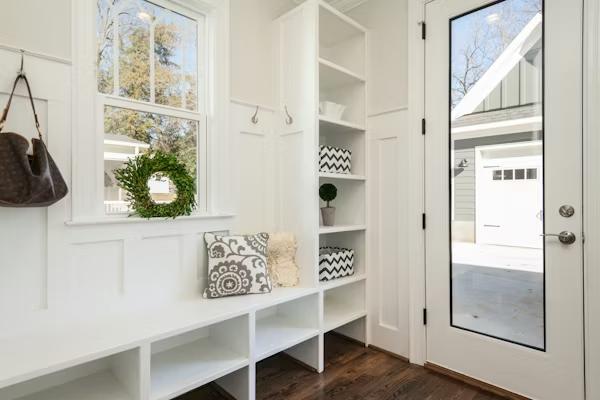
Benches with built-in storage represent brilliant entryway ideas combining seating with organization—basically multitasking furniture at its finest. These benches provide places to sit while putting on shoes (a genuine blessing for anyone whose balance isn’t what it used to be) while cubby holes or drawers below store footwear, bags, or seasonal accessories. Choose benches with lift-up seats revealing hidden storage, open cubbies for easy access, or a combination of both. Add baskets or bins in open cubbies to corral smaller items and maintain visual order. Position the bench under coat hooks creating a complete drop zone where everything has designated homes. This works beautifully in larger entryways or mudrooms, though narrow bench styles suit smaller spaces too. The investment in quality storage benches pays dividends daily when you’re rushing out the door and can actually find both shoes because they live in designated cubbies rather than opposite corners of your home.
4. Install a Statement Light Fixture
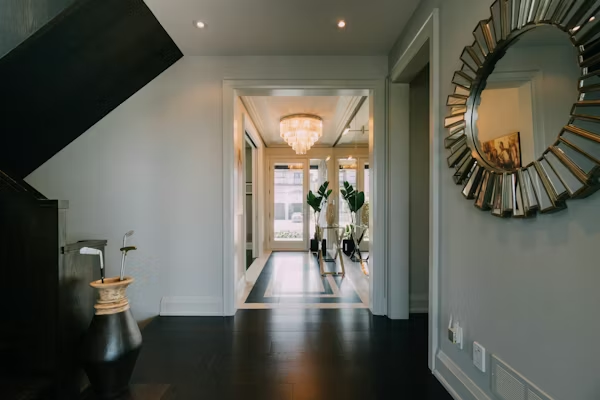
Lighting often gets overlooked in entryway ideas, yet it dramatically affects both function and atmosphere. Overhead statement lighting—a chandelier, lantern, or modern pendant—creates welcoming ambiance while providing necessary illumination for finding keys in your bag at night. The fixture becomes a focal point that guests notice immediately, signaling that your home is thoughtfully designed rather than haphazardly assembled. Choose fixtures scaled appropriately to your space—too small looks lost, too large overwhelms. For standard 8-foot ceilings, fixtures should hang high enough that tall people don’t bonk heads, but low enough to create impact. In two-story entryways, larger dramatic fixtures can hang lower creating stunning focal points visible from multiple levels. Consider dimmer switches so lighting adjusts from bright and functional to soft and welcoming based on needs. Good entryway lighting prevents fumbling in darkness while creating atmosphere that makes coming home feel special rather than mundane. Your entrance becomes properly illuminated and intentionally designed, which is basically the entire goal.
5. Add a Full-Length Mirror for Function and Space
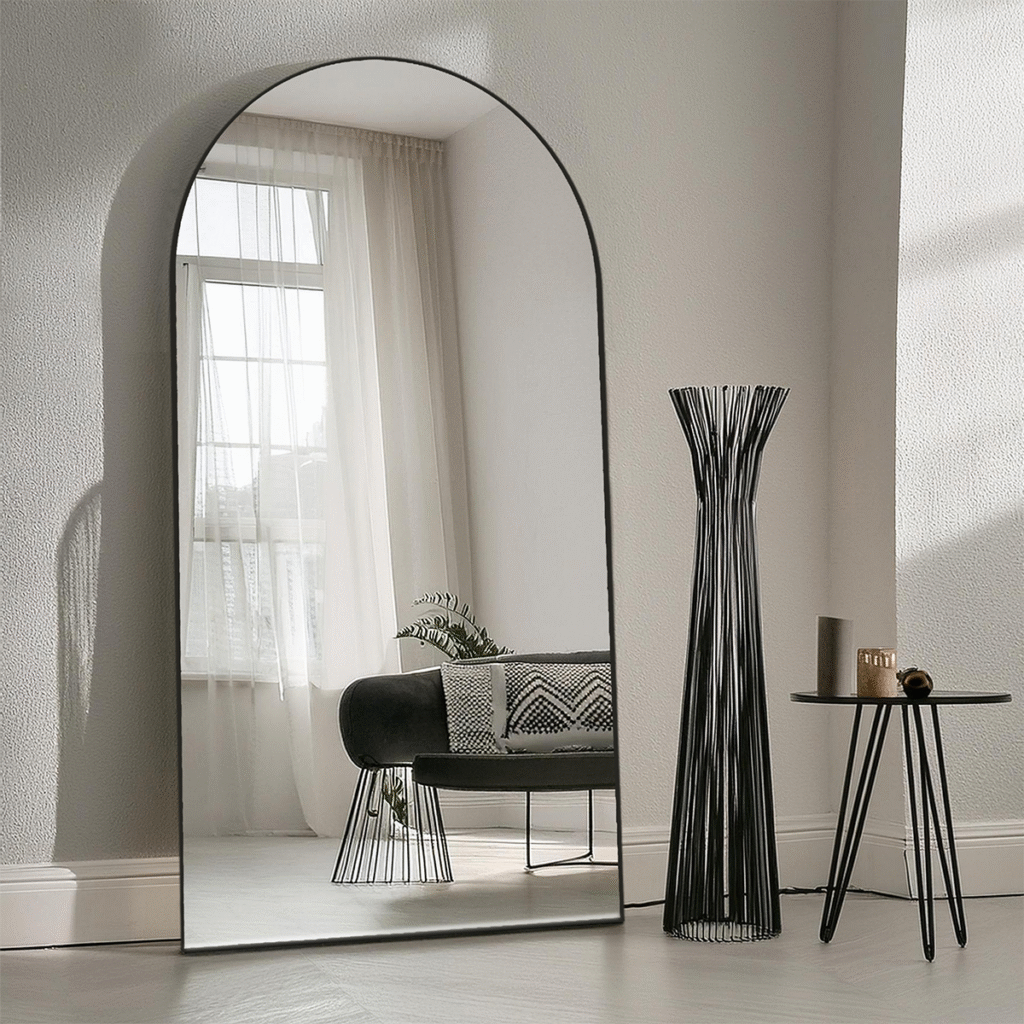
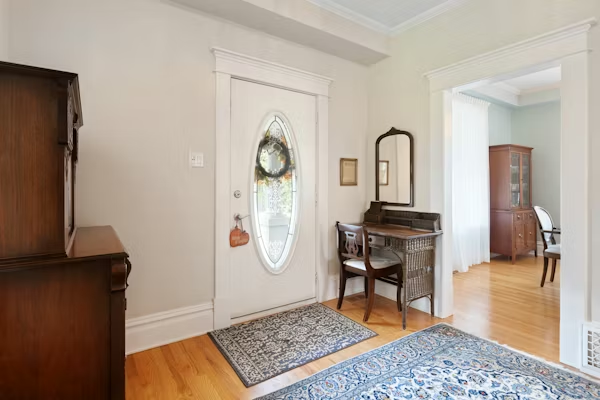
Mirrors are essential entryway ideas serving multiple purposes—final outfit checks before leaving, last-minute appearance verification before opening the door to deliveries, and visual space expansion that makes small entries feel larger. Full-length mirrors allow complete outfit assessment, preventing you from discovering weird wrinkles or visible tags only after arriving at your destination. Lean large mirrors against walls for casual, changeable arrangements, or mount them securely for permanent installations. The reflective surface bounces light around, brightening entryways that often lack windows. Position mirrors to reflect attractive views—a nice piece of furniture, artwork, or windows—rather than reflecting doors or clutter you’d prefer guests didn’t notice twice. Decorative frames turn functional mirrors into statement pieces that enhance décor while serving practical purposes. Your entryway gains depth and light while you gain the ability to catch wardrobe malfunctions before they become public embarrassments, which is honestly priceless.
6. Create a Gallery Wall or Display Area
Blank entryway walls are missed opportunities for personality and visual interest. Gallery walls or curated displays represent creative entryway ideas that make strong first impressions. Arrange family photos, artwork, or prints in cohesive groupings that reflect your personality and welcome guests into your home with visual stories. Mix frame sizes and orientations for dynamic, collected-over-time aesthetics, or maintain uniform frames for cleaner, more formal looks. Include dimensional elements like small shelves displaying objects, mounted hooks serving double duty as décor, or even vintage architectural details bringing character. The vertical wall space in entries is perfect for art collections that might overwhelm other rooms, and guests actually notice entryway displays since they’re looking around while you’re greeting them. Plan layouts carefully before hammering—map arrangements on the floor, photograph them, then recreate on walls to avoid the seventeen-hole disaster that happens when you wing it. Your entryway becomes a curated introduction to your home rather than a forgettable pass-through space.
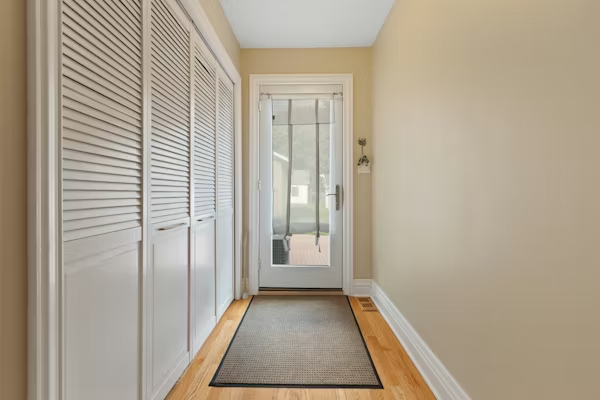
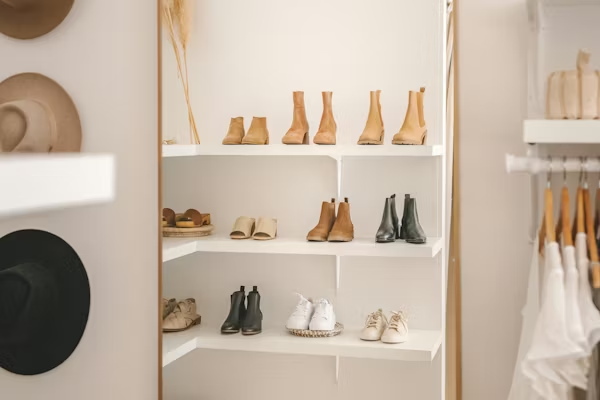
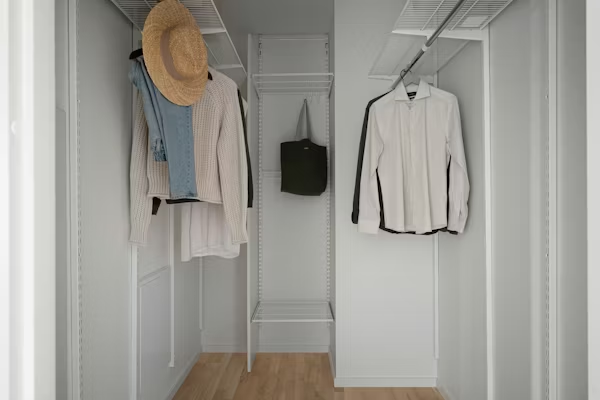
Not everything deserves display, making closed storage crucial among practical entryway ideas. Cabinets, closed benches, or armoires hide the chaos—winter gear in summer, sports equipment, cleaning supplies, or that collection of reusable bags you definitely remember to bring shopping. Closed storage maintains visual calm even when contents are chaotic, which accurately describes most people’s organizational reality. Choose furniture with doors concealing shelves or drawers, or install wall-mounted cabinets utilizing vertical space without floor footprint. The closed nature means you can shove things inside when guests arrive without extensive organizing—just shut the doors and pretend everything’s always this tidy. Baskets or bins inside cabinets create organized chaos, making items easier to find despite imperfect organization. The goal is spaces looking pulled together while functioning for real life, which sometimes means hiding evidence of how you actually live behind attractive cabinet doors. Strategic concealment is a valid organizational strategy, and closed storage enables it beautifully.
Maximizing Small Entryway Ideas
Limited space doesn’t mean limited options. Small entryway ideas prioritize vertical storage, multi-functional furniture, and space-saving solutions. Wall-mounted shelves and hooks use wall space without floor footprint. Narrow console tables provide function without blocking pathways. Mirrors create illusion of more space while serving practical purposes. Choose furniture scaled appropriately—oversized pieces overwhelm small entries while proportional furniture maintains flow. Every item should earn its place through function or beauty, preferably both. Ruthlessly edit possessions cluttering small entries, keeping only essentials and items bringing genuine joy or utility.
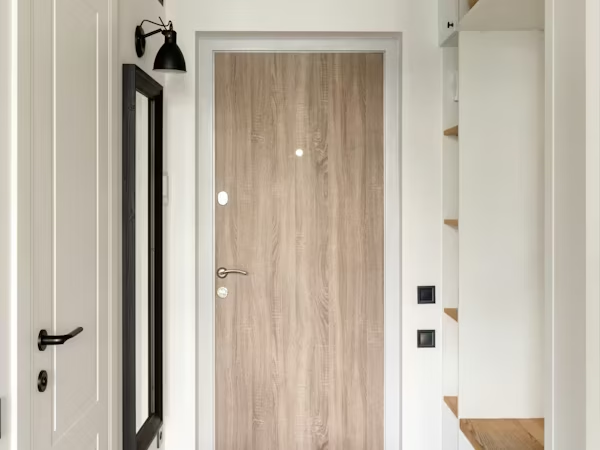
Entryway ideas should complement your overall home aesthetic while making strong first impressions. Light, neutral colors make small entries feel larger and brighter. Bold colors or wallpaper create memorable statements in larger foyers. Consider durability—entryways experience high traffic, tracked dirt, and general abuse, so choose washable paint finishes, durable flooring, and furniture that handles daily wear. Style entryways consistently with adjacent rooms for visual flow, or treat them as transition spaces that introduce your home’s aesthetic. Either approach works; just commit intentionally rather than randomly assembling whatever fits.
Creating Drop Zones
Successful entryway ideas include designated drop zones for everyday items—keys, mail, bags, shoes. Catch-all trays or bowls on consoles corral small items preventing them from scattering. Shoe racks or baskets contain footwear chaos. Mail sorters or wall-mounted organizers provide homes for incoming correspondence you’ll totally sort through later. The easier you make it to put things away properly, the more likely you’ll actually do it rather than creating piles. Systems matching your actual habits work better than aspirational organization requiring unsustainable effort. Be honest about your organizational capacity and design accordingly.
Entryway needs change seasonally, so build flexibility into your entryway ideas. Storage accommodates winter coat bulk in cold months, then holds summer accessories when temperatures rise. Decorative elements rotate—fall wreaths, winter greenery, spring flowers—keeping entries feeling fresh and current. Closed storage allows seasonal swaps without requiring furniture changes. The best entryway systems adapt as needs evolve rather than requiring constant reinvention.
Budget-Friendly Approaches
Not all entryway ideas require significant investment. Hooks from hardware stores cost under $20. Small console tables exist at every price point. Mirrors from thrift stores or discount retailers work beautifully. DIY gallery walls use inexpensive frames with personal photos or free printables. Start with affordable basics addressing biggest functional needs, then upgrade decorative elements as budget allows. Even modest investments in entryway organization provide daily returns through reduced stress and improved functionality.
The right entryway ideas transform chaotic dumping grounds into organized, welcoming spaces that support daily life while making strong first impressions. Whether you add simple hooks, invest in storage furniture, or completely redesign your entry, thoughtful improvements compound into significant quality of life enhancements.
Start with your biggest entryway pain point—shoe chaos, coat piles, key searching, or general disorganization—then implement entryway ideas specifically addressing that issue. One improvement often reveals other opportunities, and gradually your entry evolves from neglected afterthought into functional, beautiful space you’re actually proud of.
The best entryway ideas balance aesthetics with function, creating spaces that look intentional while genuinely supporting how you come and go. Your entryway is the threshold between outside world and home sanctuary—it deserves to facilitate that transition smoothly rather than adding stress through dysfunction and clutter.
Stop accepting entryway chaos as inevitable. Implement these entryway ideas thoughtfully, prioritizing solutions matching your space, budget, and actual habits. Your comings and goings will be smoother, your stress lower, and your guests impressed by your pulled-together entrance. That’s worth the effort, even if organization doesn’t come naturally.
Now stop reading about entryway ideas and start planning your transformation. Measure your space, assess your needs, and choose solutions that work for your real life. Your organized, welcoming entryway awaits—right after you finally deal with that shoe pile that’s been growing since last Tuesday. You’ve got this. Probably.