
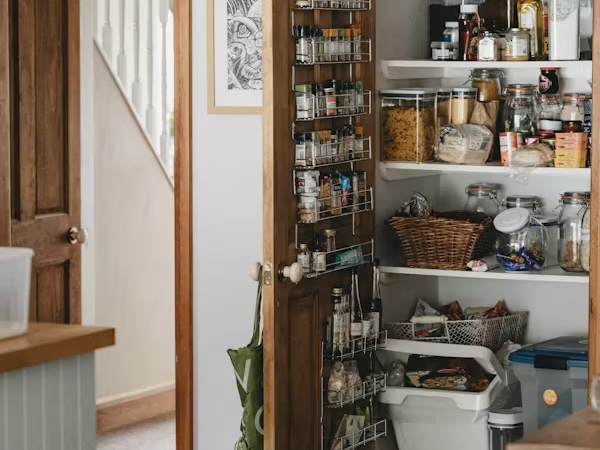
Let’s talk about your pantry: it’s probably a disaster zone where expired cans go to hide, half-empty boxes of pasta multiply mysteriously, and finding anything requires archaeological excavation skills and a flashlight. You open the door, stuff falls out, you shove it back in, and pretend everything’s fine. But what if your pantry could actually be organized and functional? Revolutionary concept, right? These pantry organization ideas transform chaotic food storage into streamlined systems where you can actually find ingredients, track what you own, and maybe even enjoy the process of meal planning. Whether you’re working with a spacious walk-in pantry, a standard cabinet, or a closet you’ve repurposed out of desperation, these ideas will help you create order from chaos and maybe inspire you to cook more than cereal for dinner.
1. Use Clear Containers for Dry Goods Visibility
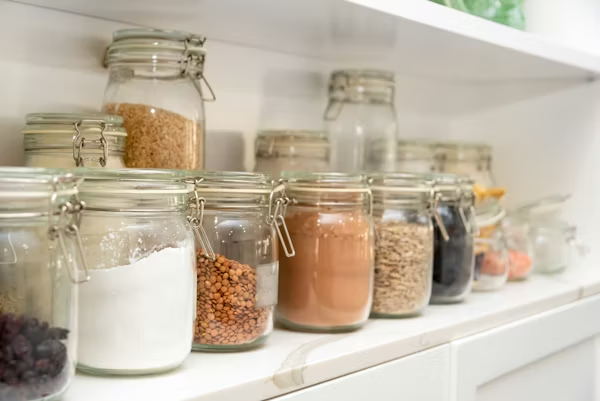
Cardboard boxes and original packaging are the enemies of pantry organization. Clear airtight containers represent foundational pantry organization ideas that revolutionize how you store dry goods. Transfer flour, sugar, rice, pasta, cereal, and snacks into transparent containers where you can see contents and remaining quantities at a glance. This visibility prevents buying duplicates (you already own three bags of quinoa, Karen) and lets you know when restocking is needed. Airtight seals keep food fresher longer while preventing pest invasions, because discovering pantry moths is a trauma nobody needs. Label containers with contents and expiration dates for extra organization points. Yes, it’s an upfront investment and time commitment, but the daily functionality and aesthetic improvement justify every penny and minute spent.
2. Install Adjustable Shelving for Flexible Storage
Fixed shelves spaced at arbitrary heights waste vertical space and create awkward gaps. Adjustable shelving systems are essential pantry organization ideas that adapt to your actual needs. Move shelves up or down to accommodate tall items like cereal boxes, oil bottles, or that bulk container of protein powder you swore you’d use. Create shorter intervals for canned goods, or wider gaps for small appliances. This flexibility means your pantry evolves with your needs rather than forcing you to work around permanent limitations. Many closet systems like Elfa or IKEA’s ALGOT work beautifully in pantries, providing modular solutions that customize to your space. The ability to reconfigure as your storage needs change is basically furniture that grows with you, except without the awkward teenage phase.
3. Add Pull-Out Drawers for Deep Shelves
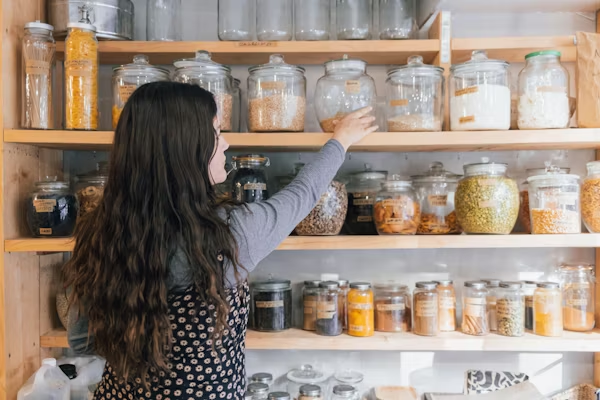
Deep pantry shelves create black holes where items disappear into back corners, never to be seen again until you move. Pull-out drawers or sliding baskets represent brilliant pantry organization ideas for accessing everything without excavation. Install drawer systems that extend fully, bringing back items to the front with a simple pull. This works particularly well for canned goods, jars, or smaller packaged items that get lost behind taller products. The visibility and accessibility prevent food waste from forgotten expired items lurking unseen. Yes, pull-out systems cost more than static shelves, but finding that can of tomatoes without removing seventeen other items first? Priceless. Or at least worth the installation cost when you calculate time savings over years.
4. Implement a Door Organizer System
The back of your pantry door is prime real estate going completely to waste. Over-the-door organizers are space-maximizing pantry organization ideas that create storage from thin air—or at least from previously unused surfaces. These racks hold spices, snacks, small packets, or cleaning supplies without occupying valuable shelf space. Choose from wire racks, pocket organizers, or adjustable systems based on what you’re storing. The shallow depth works perfectly for items that don’t need deep shelving but deserve easy access. Just ensure whatever you mount can support the weight without making your door too heavy to close, because a pantry door that won’t shut defeats the purpose of having a pantry.
5. Create Zones by Category for Easier Finding
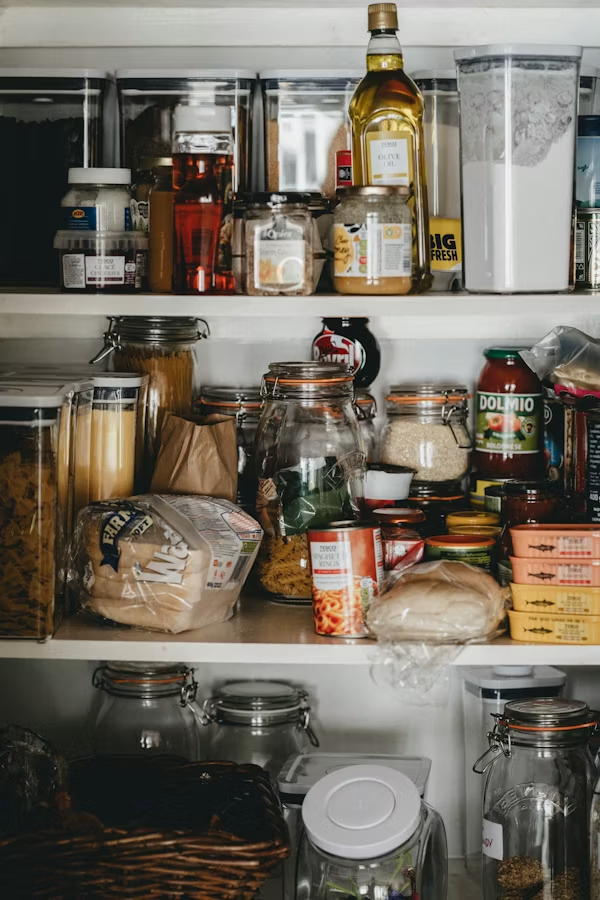
Random placement where baking supplies mingle with snacks and canned goods neighbor breakfast items creates functional chaos. Category zoning represents organizational pantry organization ideas that simplify cooking and shopping. Designate specific areas: baking zone with flour, sugar, and baking supplies; breakfast zone with cereals, oats, and coffee; snack zone with chips, crackers, and treats; canned goods section; pasta and grains area. This systematic approach means you know exactly where to look rather than scanning your entire pantry. It also reveals what you’re low on or overstocked in, improving shopping efficiency. You might discover you own nine cans of chickpeas but no tomato sauce, which explains why certain recipes haven’t happened.
6. Use Lazy Susans for Corner and Deep Spaces
Corner spaces and deep shelves are where items go to die forgotten deaths. Lazy Susans—rotating turntables—are genius pantry organization ideas for making everything accessible. Place turntables in corners to utilize typically awkward spaces, or use them on deep shelves for oils, vinegars, sauces, and condiments. A simple spin brings everything into view and reach without digging. This works particularly well for items in similar containers that are hard to distinguish from the front—all those spice jars, salad dressings, or hot sauces become easily browsable. Multiple sizes allow customization to your specific shelves. The satisfying spin action makes pantry access almost fun, which might be a stretch but we’re working with what we’ve got here.
7. Install Stackable Can Organizers
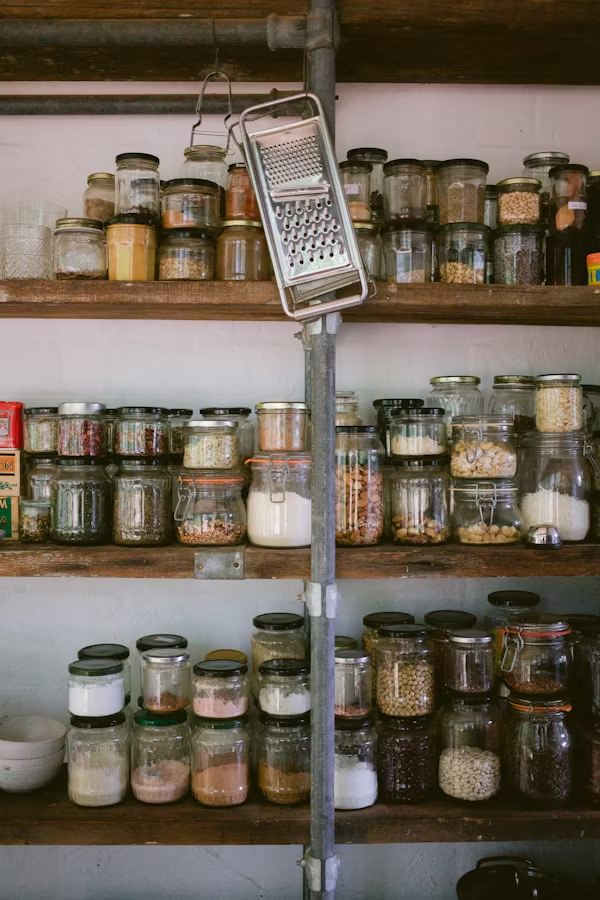
Canned goods stacked haphazardly topple and hide labels, making inventory management impossible. Stackable can dispensers or step-style organizers represent smart pantry organization ideas for canned products. These tiered systems display cans at angles where labels are visible and accessible. Some versions automatically roll cans forward as you remove them, creating that first-in-first-out rotation that prevents expired cans lurking in back. Step-style organizers work similarly, displaying cans on angled levels for complete visibility. This approach maximizes vertical space while keeping everything organized and accessible. Your canned good collection transforms from chaotic pile into orderly display, which sounds boring but feels surprisingly satisfying when you’re making dinner and can actually find the coconut milk.
8. Add Baskets or Bins for Grouping Small Items
Loose small packages—seasoning packets, snack bars, tea bags—scatter across shelves creating visual and functional chaos. Baskets and bins are simple pantry organization ideas for corralling small items into manageable groups. Use one basket for all snack bars, another for tea and coffee supplies, one for baking add-ins like chocolate chips and nuts. Label baskets for easy identification, or use clear bins so contents are visible. This containerization prevents small items from getting lost while creating visual order. Pull out the entire basket rather than searching through scattered items—efficiency and organization combined. Choose basket styles that complement your aesthetic: wire for industrial, woven for farmhouse, acrylic for modern. Function meets form, which is the design sweet spot.
9. Implement FIFO with Shelf Risers
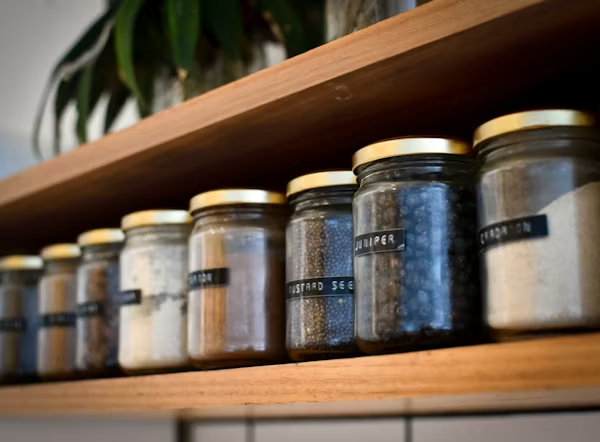
First-In-First-Out isn’t just restaurant inventory management—it’s smart pantry organization ideas for home use. Shelf risers create two levels on single shelves, doubling usable space while helping you rotate stock. Place newer items on the back higher level and older items front and lower so you naturally use older products first. This prevents expiration waste and ensures you actually use what you buy. Risers work beautifully for canned goods, jarred items, or boxed foods. The tiered display keeps everything visible rather than stacked where bottom items become forgotten archaeology. Various heights and configurations let you customize to your shelves and products. Your pantry becomes a well-oiled machine of food rotation, which sounds intense but just means less waste and fewer science experiments growing in the back.
Pantry organization ideas span budgets from nearly free to mortgage-threatening. Dollar store containers and baskets solve problems cheaply. Mid-range options from container stores or IKEA balance quality with affordability. High-end custom systems with pull-outs, specialized storage, and premium materials represent significant investment justified only by serious needs or unlimited budgets. Start with budget-friendly improvements addressing biggest pain points. Build gradually, implementing ideas as budget allows rather than waiting for perfect conditions that may never arrive.
Maximizing Small Pantries
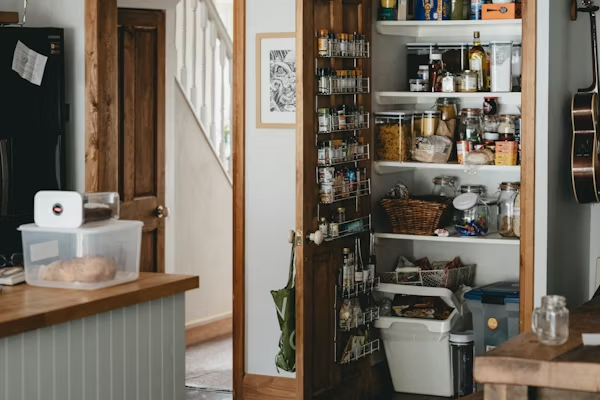
Limited space doesn’t mean limited organization. Small pantry organization ideas prioritize vertical space, door storage, and multi-functional solutions. Use every inch of height with floor-to-ceiling shelving. Capitalize on door backs for shallow storage. Choose adjustable systems that adapt to changing needs. Sometimes small pantries force ruthless editing that improves overall kitchen function—if space is truly limited, keeping only what you actually use regularly prevents accumulation and improves efficiency.
Your Organized Pantry Future
The right pantry organization ideas transform daily frustration into streamlined efficiency. No more buying duplicates because you couldn’t see what you owned. No more expired food waste from forgotten items lurking invisibly. No more avalanches when opening doors. Your pantry should support meal preparation, not sabotage it.
Start with one improvement addressing your biggest frustration. Maybe it’s finally getting clear containers so you can see dry goods. Perhaps it’s adding door storage for spices. Or just purging expired items creating space for what you actually use. One change leads to another, and gradually pantry chaos becomes functional system.
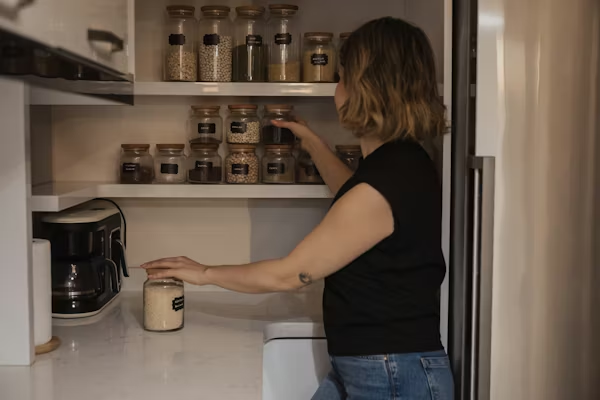
The best pantry organization ideas balance maximum storage with easy accessibility, creating spaces that look beautiful while genuinely supporting daily life. Your food deserves better than chaotic piles and you deserve better than pantry-induced stress every time you try to make dinner.
Related Posts:
Stop accepting pantry chaos as inevitable. Implement these pantry organization ideas and create systems working for your space, your inventory, and your real-life habits. Your cooking will be easier, your grocery shopping more efficient, and your stress measurably lower. That’s worth the effort, even if organization doesn’t come naturally.
Now stop reading about pantry organization ideas and start emptying your pantry, because those canned goods aren’t going to organize themselves. And that mysterious sticky shelf? Time to finally deal with it. Your organized future awaits, right after you finish the purging, cleaning, and systematic reorganization. You’ve got this. Probably.